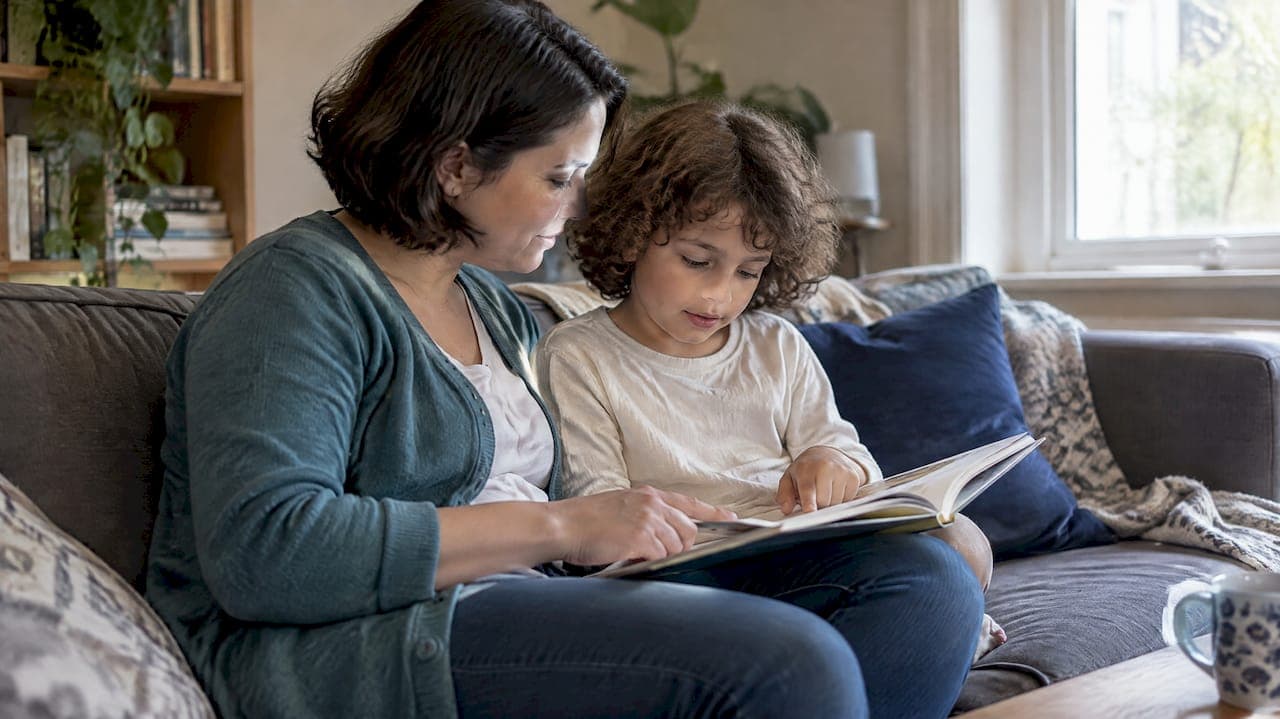
Buddy reading means two people reading the same book together and talking about it as they go, whether that's a parent and child trading off pages or two friends texting chapter reactions. It builds reading fluency, comprehension, and motivation, and it works for emerging readers and lifelong bookworms alike. The format flexes to fit almost any pairing, which is why it has stuck around.
TL;DR:
- For children, paired reading improved fluency, comprehension, and attainment in a 2026 study of 4,840 pupils when sessions followed clear roles consistently.
- Before starting, agree on a realistic schedule, spoiler rules, and whether a partner may read ahead; three or four discussion checkpoints can keep conversations focused.
- For children building fluency, predictable books with repeated phrases may work better than exciting titles that sit above their reading level.
Table of Contents
- What Buddy Reading Actually Means
- How to Run a Buddy Read, Start to Finish
- Buddy Reading With Kids: Building Fluency and Confidence
- Tips to Start a Buddy Read and Keep It Going
- Which Books Work Best for a Buddy Read
- Formats and Tools for Reading Together
- How We Think About Buddy Reading
- What Buddy Reading Gets Wrong in Popular Advice
- A Few Bookaholic Resources Worth Checking Out
- FAQ
- Sources
What Buddy Reading Actually Means
"Buddy reading" covers more ground than people expect, and the term shifts depending on who's using it. At its loosest, it's two adults picking a novel and chatting about it over coffee or text. At its most structured, it's a specific-paired reading method teachers and parents use to build a child's fluency, with defined roles and a steady rhythm.
Knowing which version you're aiming for matters because the setup is different. A casual buddy read between grown friends thrives on loose scheduling and open-ended chat. A structured session with a child benefits from short, predictable turns and a bit of gentle coaching.
Here's how the common terms break down:
- Buddy read: any two (or more) people reading the same book on a shared timeline, usually with discussion built in.
- Paired reading: a structured method, often used with children, where a stronger and weaker reader alternate turns to build fluency.
- Read-along: following a text while listening to it read aloud, often used with audiobooks or classroom recordings.
- Book buddy: the person you're reading with, a term popular in classrooms and library programs.
- Partner reading: largely interchangeable with paired reading, though some educators use it for peer pairs rather than adult-child pairs.
A light, social buddy read is the right call when the goal is connection and conversation. A structured paired-reading session makes more sense when the goal is skill-building, especially for a child still finding their footing with longer sentences or new vocabulary.
How to Run a Buddy Read, Start to Finish
A buddy read succeeds or stalls based on a handful of early decisions, not willpower. Get the structure right and the rest tends to follow.
- Pick a partner with compatible pace and goals. A friend who reads in sprints and one who reads a chapter a week will frustrate each other fast, so talk about pace before you pick a book.
- Set expectations up front. Agree on a rough finish date, how you'll handle spoilers, and whether check-ins happen daily, weekly, or whenever something exciting happens.
- Build a simple schedule. Break the book into weekly or twice-weekly chunks rather than a vague "let's finish it sometime." A two-week timeline works well for shorter or faster-paced books.
- Choose your format. Decide whether you'll read aloud to each other, read silently and compare notes, or alternate: one person reads a page or chapter aloud, then hands off.
- Set discussion checkpoints. Pick three or four natural pause points (end of a section, a big plot turn, the midpoint) rather than trying to discuss every chapter in detail.
- Plan for falling behind. Agree in advance that one person can read ahead without guilt, as long as spoilers stay out of the conversation until the other catches up.
Discussion prompts don't need to be elaborate. "What surprised you?" "Who do you think is lying?" "Would you have made that choice?" are enough to spark a real conversation rather than a book report. For kids, prompts can be even simpler: "What do you think happens next?" or "Why do you think the character did that?"
Pro Tip: Keep a shared note (a text thread, a notes app, or a dedicated Google Doc) where you both jot reactions as you read, so you're not trying to remember a half-formed thought two days later.
The most common way buddy reads fall apart is mismatched pace with no fallback plan. Building the "it's fine to read ahead" rule into your very first conversation removes most of the friction before it starts.
Buddy Reading With Kids: Building Fluency and Confidence
Paired reading with children isn't just a cozy bedtime ritual, it's one of the better-supported methods for building fluency. A 2026 Peer Assisted Learning Strategies study of 4,840 pupils found that paired-reading approaches meaningfully improved reading attainment, oral fluency, and comprehension when the method was followed consistently. The same research notes that fidelity matters: the benefits show up when roles are clear and practice is regular, not occasional.
The classic structure alternates turns at a scale that matches the child's level:
- Sentence-by-sentence: good for brand-new readers still decoding word by word.
- Paragraph-by-paragraph: a solid middle step once single sentences feel too slow.
- Page-by-page: for kids approaching independent reading who just need a confidence boost.
A few techniques pair well with this turn-taking structure. Echo reading has the adult read a line first, then the child repeats it, which models pacing and expression. Choral reading has both of you read the same line together out loud, useful for a child who freezes up reading solo. Choosing predictable or patterned texts, books with repeating phrases or rhyme, gives early readers a scaffold they can lean on when a word trips them up.
One in five children struggle enough with reading that targeted support meaningfully changes outcomes, which is part of why paired reading frameworks built on fidelity and consistency have earned attention from researchers rather than just parenting blogs.
Short sessions beat marathon ones. Ten to fifteen minutes a day, or every other day, tends to build more momentum than a single long session once a week, since fluency gains come from repetition more than duration.
For a reluctant reader, swapping the audience can lower the pressure dramatically. Scholastic's parent guidance suggests alternate listeners like a pet, a stuffed animal, a younger sibling, or a grandparent on the phone, since reading to someone who isn't grading the performance takes the stakes down a notch. That same principle extends to babies and toddlers: reading aloud regularly from early on, even before a child can follow the plot, supports early literacy development in ways that compound later.

Tips to Start a Buddy Read and Keep It Going
The hardest part of any buddy read isn't finishing, it's getting past the first week without one person quietly falling off.
- Pick a partner you can be honest with. Someone who'll actually tell you they're behind, rather than ghosting the group chat, saves the whole thing.
- Agree on the basics before you start: time commitment, spoiler rules, and how often you'll check in.
- Use a calendar invite or recurring reminder. A standing Tuesday-night nudge does more than good intentions.
- Keep shared notes. A running doc or thread where you both drop thoughts mid-read keeps the conversation alive between sessions.
- Add small accountability. Posting progress somewhere public, even just to a small group chat, makes people less likely to quietly quit.
Pro Tip: If the book turns out to be emotionally heavy, agree on a "pause and vent" rule: either person can call a short break from the plot to process before moving on, no explanation required.
Spoiler etiquette deserves its own quick conversation, especially with a book that has a twist. Decide whether "I finished early" means silence until your partner catches up, or a vague "no comment" that confirms nothing. Readers on forums and social platforms consistently flag this as the single biggest source of buddy-read friction, right alongside mismatched pace.
Once a single buddy read goes well, turning it into a habit is mostly a matter of not letting the momentum die. Lining up your next book before you finish the current one, even loosely, keeps the pairing active instead of making you start from scratch each time. If motivation dips between books, a structured plan for breaking a reading slump can help diagnose what's actually stalling you out.
Which Books Work Best for a Buddy Read
The right book depends less on what's trendy and more on whether it gives you something to talk about. A quick mental checklist helps:
- Length and pacing: shorter or fast-moving books keep momentum up for a first buddy read.
- Discussion hooks: ambiguous endings, morally gray characters, or surprising twists give you more to chew on.
- Age appropriateness: content and vocabulary should match the reader's stage, not just their grade level.
- Format fit: a book available in audio or large print removes friction for partners with different reading preferences.
For young children, predictable or patterned picture books work well for building early fluency. For early readers, short chapter books with repetitive structure ease the jump to longer texts. Middle-grade readers tend to do well with adventure or mystery series that end chapters on small cliffhangers, which naturally sets up the next session's starting point. YA readers often gravitate toward character-driven contemporary fiction or speculative fiction with clear stakes. Adult buddy reads can go anywhere, though book club staples like literary fiction, memoir, or layered mysteries tend to generate the richest conversation.
If completion rate matters more than literary ambition, lean toward shorter, lower-friction titles, a curated list of accessible picks can help narrow the field fast. For a lighter emotional register, genre-based mood-lifting picks or found-family stories built for discussion both tend to spark good conversation without demanding a huge time commitment.
Formats and Tools for Reading Together
Buddy reads work in person, over the phone, on video calls, or entirely through text, and each format has tradeoffs. In-person reading allows for shared physical cues and easy read-aloud turns, but it requires matching schedules in the same place. Phone calls work well for families reading across distance. Video calls (Zoom or similar) add visual connection for kids who benefit from watching an adult's expressions while reading aloud.
For coordination, most pairs don't need anything specialized:
- Shared calendars: a recurring invite keeps session times from quietly disappearing.
- Group chats: low-friction spaces for quick reactions between sessions.
- Shared notes or Google Docs: a running log of thoughts, questions, and favorite lines.
- Dedicated buddy-reading apps: some readers ask about these, but they often just duplicate scheduling and note-sharing features a calendar app and a notes app already cover.
Accessibility matters here too. Audiobooks let a struggling or busy reader keep pace with a partner who prefers print, closed captions help during video read-alongs, and screen readers make shared digital notes usable for partners with visual impairments. For families navigating attention or decoding differences, resources on reading support for neurodivergent learners can help shape realistic expectations for pacing and format.
How We Think About Buddy Reading
Reading partnerships often come up as a reliable way to stick with a book when life gets in the way, since having someone else expecting a check-in tends to work better than willpower alone.
Listeners regularly ask us how to find a compatible reading partner when their usual circle doesn't share their taste, and how to keep a long book from feeling like a chore once the initial excitement fades. Those conversations echo what shows up in the research on paired reading: consistency and clear expectations matter more than finding the "perfect" partner.
If you want more on building sustainable reading habits, our reading habits category collects listener stories and practical routines worth borrowing, and our conversation with Audiofile Magazine's Robin Whitten touches on how audio formats can make shared reading easier across mismatched schedules.
What Buddy Reading Gets Wrong in Popular Advice
Most buddy-reading advice treats pace matching as the main obstacle, and it's not. The real failure point is vague expectations set at the start: no agreement on spoilers, no plan for falling behind, no sense of what "finishing together" even means. Fix that conversation and pace differences mostly solve themselves.

The other overrated idea is that buddy reading needs a dramatic, discussion-heavy book to work. Plenty of successful reading partnerships run on quiet, unremarkable books where the real value is the standing appointment itself, not the plot twists. For kids especially, the predictable, slightly boring patterned book often builds more fluency than the exciting one that's two reading levels too high.
What actually deserves priority is the structure: clear roles, a realistic schedule, and permission to adjust it. Everything else, the perfect book, the ideal app, the ambitious discussion questions, is decoration on top of that foundation.
— Deirdre
A Few Bookaholic Resources Worth Checking Out
If you're hunting for your next buddy-read pick or just want more reading company, our podcast spends a lot of time exactly there: author interviews, book reviews, and conversations about the reading life that go beyond a quick recommendation list.
A few starting points:
- Our episode on Envelope Books and its approach to distinctive cover design is a fun listen if you're choosing a buddy read based partly on how a book looks and feels.
- Our conversation with a young author on turning early creative dreams into published work works well for teens pairing up on a buddy read with a parent or mentor.
- Our overview episode is the easiest place to get a feel for the show before diving into a specific interview.
Reading-themed merchandise is available for those interested in a small, tangible nod to their reading community or current reading experience. Browse what's available for options.
FAQ
What does it mean to buddy read?
Buddy reading means two or more people read the same book on a shared timeline and discuss it as they go, whether through casual chat or a structured turn-taking method. It ranges from relaxed adult book pairings to evidence-based paired reading used to build a child's fluency.
What company will pay you $200 for every book you read?
A 2022 job listing from WordsRated offering payment for reading books was confirmed as legitimate by Snopes, though roles like this are niche, task-specific, and not a reliable or scalable way to get paid for reading. Treat any similar listing with the same case-by-case scrutiny before applying.
What app can I use for buddy reading?
Most buddy reads run fine on tools people already have, a shared calendar for scheduling, a group chat for quick reactions, and a notes app or Google Doc for tracking thoughts as you read. Dedicated buddy-reading apps exist, but they typically just repackage those same basic features.
How do I start a buddy read?
Pick a partner with a compatible pace, agree on a rough schedule and spoiler rules, and choose a book short enough to keep momentum through the first week. From there, set a few discussion checkpoints and build in permission for one person to read ahead without guilt.
Sources
- Peer Assisted Learning Strategies (PALS-UK) increases reading attainment
- Reading Buddies
- Is WordsRated paying $200 per book to readers for a living? | Snopes