
A reading slump is a temporary drop in reading motivation, not proof you've fallen out of love with books. The fastest resets: set a 10-minute timer and read exactly that long, switch to an audiobook if your eyes are the problem, or grab a short palate-cleanser under 200 pages. Slumps are common, they're reversible, and most people are reading again within days once they match the fix to the actual cause.
TL;DR:
- Matching the fix to your specific reading slump type, such as using shorter books for book hangover or reducing overreading for burnout, is crucial.
- Micro-reading sessions of 10 minutes or switching to audiobooks can quickly rebuild momentum, especially when focus or attention is low.
- Choosing short, fast-paced, or familiar books like novellas, feel-good romances, or essay collections helps restore confidence and enjoyment.
- A structured 30-day plan gradually increases reading time and mixes formats to rebuild stamina without risking burnout or guilt.
- If a prolonged lack of interest coincides with broader fatigue or mental health issues, prioritizing rest and consulting a professional is recommended over forcing reading.
Table of Contents
- What kind of reading slump are you actually in?
- The fastest tactics to break a reading slump today
- Short books and formats that rebuild reading confidence
- A 30-day plan to rebuild your reading stamina
- When a slump is more than just a reading habit
- What I've learned covering readers who feel stuck
- Where to find your next read and a little encouragement
- Sources
What kind of reading slump are you actually in?
Not every slump has the same cause, and that's why generic advice ("just read more!") often backfires. Librarians and reading researchers increasingly frame slumps as symptoms with distinct triggers rather than one universal problem, and matching the remedy to the cause is what actually gets people unstuck. Forcing yourself through a novel when you're truly burned out just deepens the resistance.
Here's how to spot which one you're dealing with:
- Book hangover or series hangover. You finished something that gutted you emotionally, and every new book feels flat by comparison. Sign: you keep starting books and abandoning them within 20 pages, not because they're bad, but because nothing matches what you just left behind.
- Burnout or overread. You crammed too many books into too little time, maybe chasing a Goodreads goal, and your brain is simply tired of processing narrative. Sign: reading feels like a chore, even for genres you normally love.
- Boredom or mismatch. You're reading the wrong book for your current mood, not the wrong hobby. Sign: you're excited to read in theory but keep bouncing off the specific book in your hand.
- Attention or tech fatigue. Scrolling has rewired your patience for slower pacing. Sign: you reread the same paragraph three times because your brain keeps reaching for your phone.
- Life bandwidth or stress. Work, caregiving, or a hard season has eaten the mental space reading requires. Sign: you have zero energy left for anything that asks you to concentrate, including books.
The fix differs by type. Hangovers need a genre-swap palate cleanser, not another emotionally heavy book. Burnout needs rest and a lower bar, not discipline. Boredom needs a mood match, which is really a book-selection problem disguised as a motivation problem. Attention fatigue needs shorter sessions and a book hangover recovery style palate cleanser. Life bandwidth needs you to shrink the goal, not push harder.
Pro Tip: Write down the last three books you tried to start and abandoned. If they share a theme (all heavy, all long, all similar to your last great read), that pattern is your diagnosis.
The fastest tactics to break a reading slump today
Once you know your type, work through these in order. Each one takes minutes to start.
- Set a micro-reading window. Ten minutes, phone in another room, one chapter cap. Attention spans for single-screen tasks have shrunk noticeably since the early 2000s, according to reporting on the couch-to-5k approach for books, which is exactly why starting smaller than feels necessary works better than an ambitious hour-long block you'll skip.
- Switch the medium. If your eyes are tired or focus is shot, audiobooks preserve the same narrative comprehension as print, according to reporting on how to escape a reading slump. Commute time, dishes, or a walk all become reading time without asking anything extra of your attention.
- Grab a genuine palate cleanser. Short story collections, essay anthologies, or graphic novels reset your relationship with finishing something. The goal is momentum, not a masterpiece.
- Give yourself permission to DNF. Abandoning a book you're not enjoying isn't failure. It's often the single fastest way to stop feeling stuck, because dread over one unfinished book blocks you from starting the next.
- Delete the pressure. If a Goodreads goal or a TBR spreadsheet is turning reading into homework, hide it. Reader communities consistently find that removing gamified reading pressure restores the actual enjoyment.
- Recruit a low-pressure accountability partner. A buddy read or a casual book club check-in works better than willpower alone, because you're reading for connection, not just yourself.
16% of Americans read for pleasure on any given day, down from 28% in 2004, according to a national reading survey. That drop tracks almost exactly with the rise of smartphone scrolling, which is why so much slump advice now centers on rebuilding attention in small, deliberate doses rather than assuming motivation alone will fix it.
Short books and formats that rebuild reading confidence
The books that pull you out of a slump aren't necessarily your favorite genre. They're the ones you can actually finish, which resets your brain's sense that you're still a reader.
- Comfort re-reads. A book you already know and love removes the risk of disappointment entirely. No new plot to evaluate, just familiar company.
- One-sitting novellas. Anything under 200 pages that you can finish in a single afternoon. Finishing something, anything, is the whole point here.
- Fast-paced thrillers. Plot-driven pacing with short chapters gives your brain the dopamine hit of forward momentum, which is exactly what book hangover recovery guides recommend for readers who feel emotionally flat.
- Feel-good romance or cozy fantasy. Low emotional stakes, guaranteed satisfying endings. If you want mood-matched options, a list built around cozy fantasy picks or romantasy recommendations beyond the usual BookTok titles is a good place to browse.
- Essay collections. Read one essay, get a complete emotional arc, close the book without guilt. No need to remember fifteen character names across 400 pages.
- Audiobooks. Especially memoir or narrative nonfiction read by a strong narrator. This format carries you when your visual attention is the actual bottleneck.
If you want a longer curated list to pull from once momentum returns, building a reading list you'll actually finish is worth bookmarking.
A 30-day plan to rebuild your reading stamina
Treat this like training a muscle you haven't used in a while, because that's essentially what it is. Librarian-designed programs increasingly frame reading recovery as a structured 30-day bootcamp rather than a mood you wait out.
- Week 1: rebuild the habit, not the volume. Ten to fifteen minutes daily, same time if possible, any book. The goal is showing up, not pages read.
- Week 2: increase time and mix formats. Push to 20 to 25 minutes and alternate print with an audiobook chapter. Variety keeps the brain from associating reading with monotony.
- Week 3: add light accountability. Text a friend what you read, post in a community thread, or join one buddy-read check-in. External motivation carries you past the days willpower alone won't.
- Week 4: consolidate and choose your next challenge. Pick one slightly longer or more ambitious book to close out the month, proving to yourself the stamina actually came back.
Real life will interrupt this plan, and that's fine. Shift a day, shrink a session to five minutes, or swap print for audio when you're too exhausted to focus on a page. The schedule bends; the daily habit is the part that matters.
Pro Tip: If you miss two days in a row, don't restart the whole week. Just do today's ten minutes and keep going. Momentum survives gaps better than it survives guilt.
When a slump is more than just a reading habit
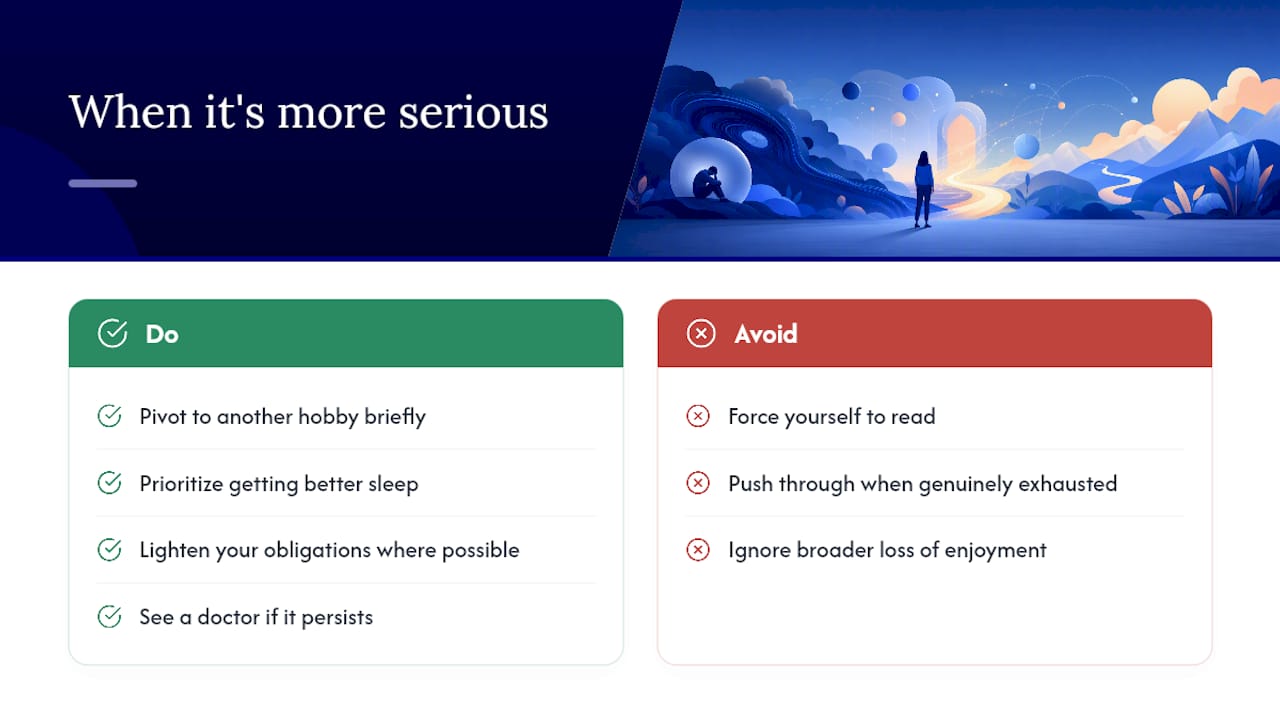
Most slumps are ordinary and temporary. But if you've lost interest in reading for weeks alongside disrupted sleep, trouble concentrating on anything (not just books), or a broader loss of enjoyment in things you used to like, that's worth taking seriously as more than a hobby dip.
In that case, forcing yourself to read is often the wrong move. Experts on reading habits note that when you're genuinely exhausted, pivoting to another hobby briefly until desire naturally returns tends to work better than pushing through. Prioritize sleep, lighten your obligations where you can, and talk to a doctor if the flatness persists beyond a few weeks. Reading comes back. Rest comes first.
What I've learned covering readers who feel stuck
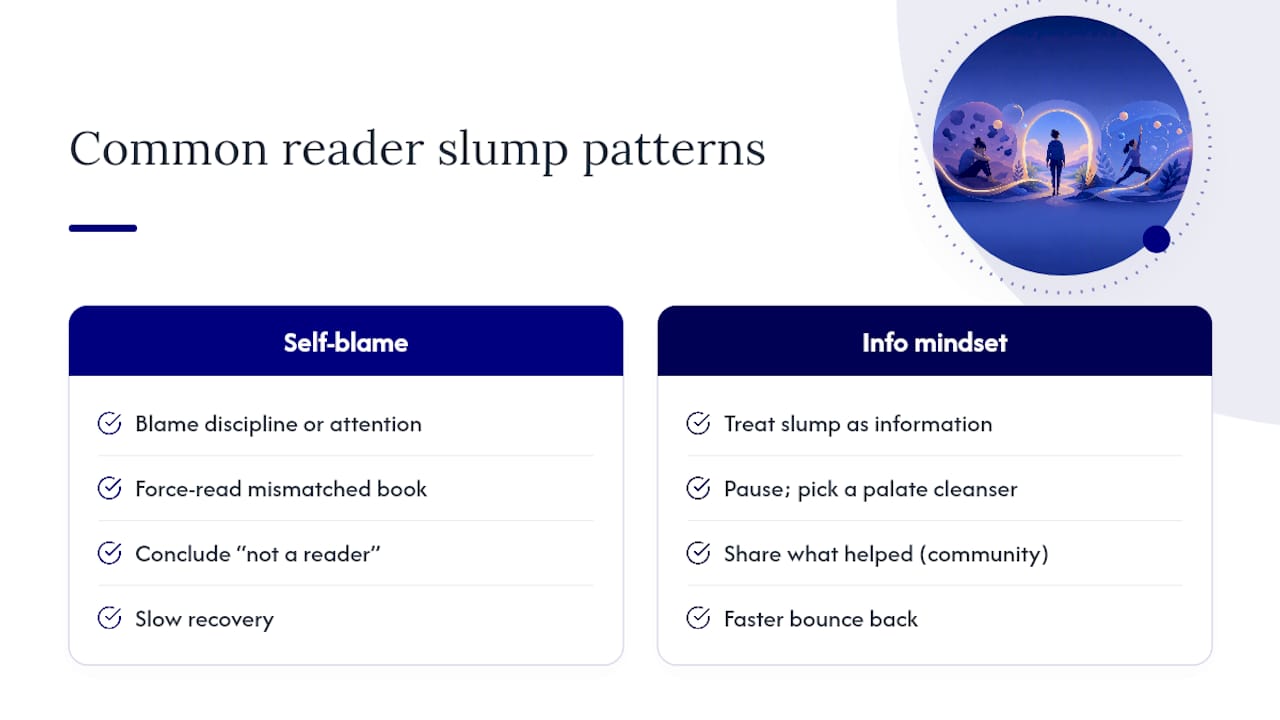
Nearly every reader I talk to on the podcast assumes their slump is unique to them, some personal failure of discipline or attention. It almost never is. The pattern I hear over and over is someone forcing themselves through a book that doesn't match their current emotional bandwidth, then concluding they've stopped being a reader entirely.
The readers who bounce back fastest are the ones who stop treating the slump as a character flaw and start treating it as information. If you've tried the bootcamp above, or found your own version of a palate cleanser that worked, tell us about it in the community or drop a comment on an episode. I'd genuinely like to know what got you back on the page.
— Deirdre
Where to find your next read and a little encouragement
Rebuilding a reading habit is easier with company, and that's the whole reason the Bookaholic Podcast exists. Author interviews give you the story behind the story, which often reignites interest in a genre faster than the book itself can.
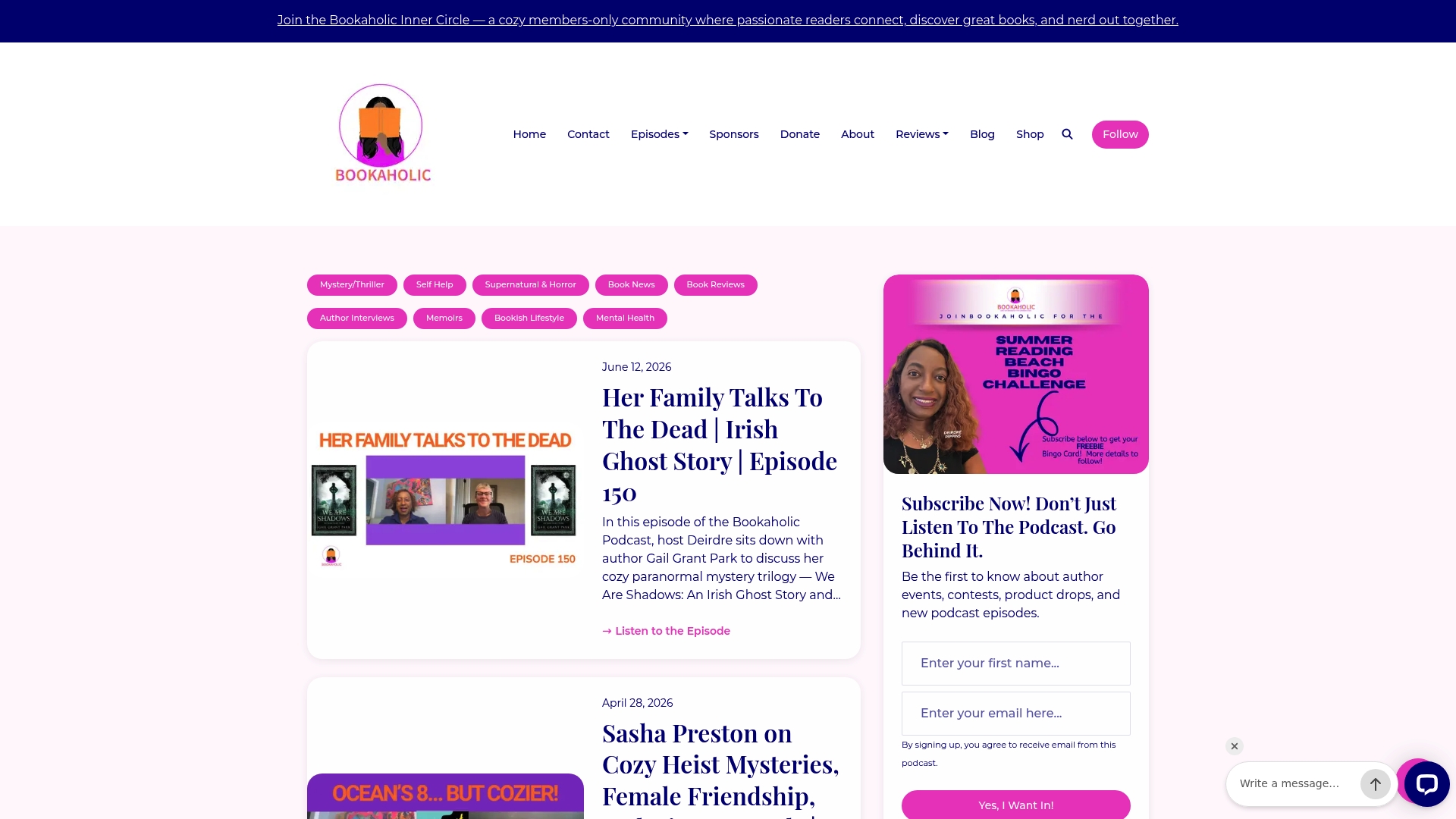
If your slump has a mental-health thread running underneath it, the Mental Health Awareness episode on peace, joy, and abundance is a gentle place to start, alongside conversations about the writing process itself, like Lauca's international writer's workshop episode. Curious how audiobooks fit into slump recovery? The conversation with Audiofile Magazine's Robin Whitten breaks down what makes a narrator worth your commute time. Start with one episode this week, pair it with your 10-minute timer, and see where it takes you.
Sources
- Proportion of Americans reading for pleasure fell 40% over 20 years
- Can’t get through a book anymore? Try this librarian’s 30-day reading bootcamp
- Could a couch-to-5k for books get you back into reading?
- Reading for pleasure is plummeting in the US