
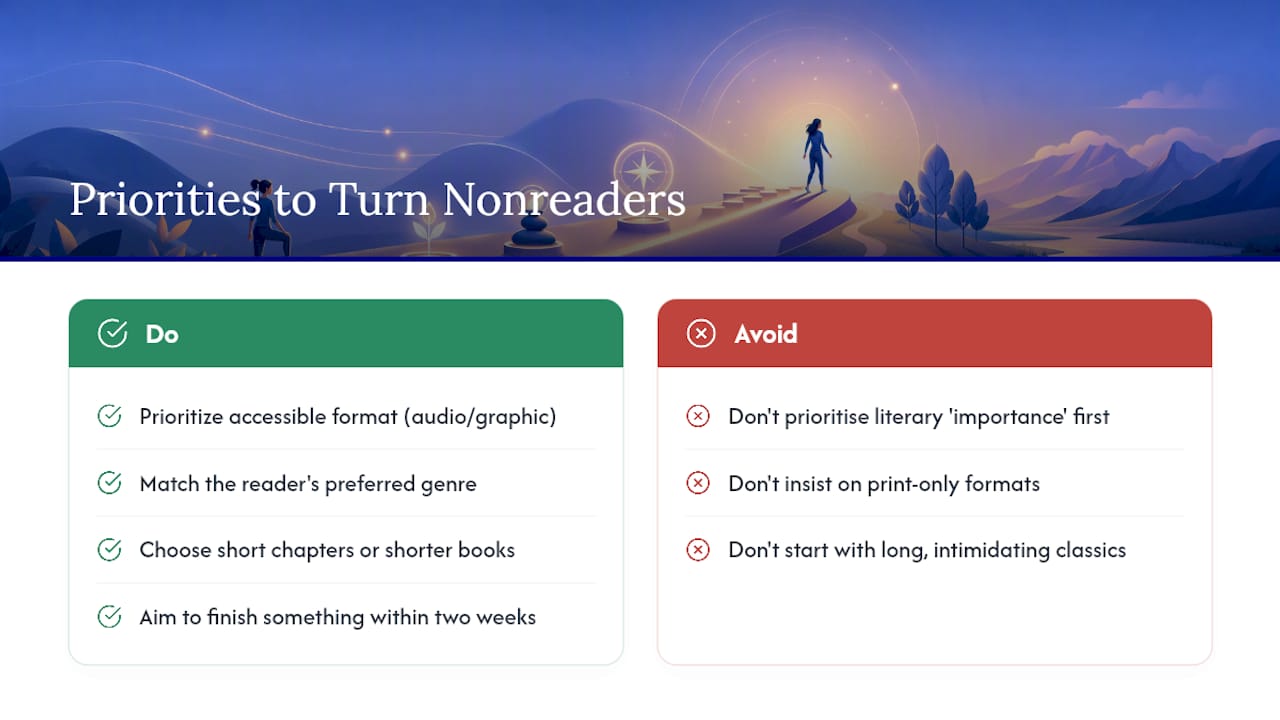
The fastest way to hook someone who doesn't read is to skip the classics entirely and hand them a short, fast-moving book or a great audiobook in a genre they already love. A gripping thriller, a graphic novel, or a page-turning memoir will out-perform a "should-read" every time. The goal isn't literary prestige. It's finishing one book and wanting a second.
TL;DR:
- Shorter books with short chapters and fast-paced plots significantly increase the likelihood of finishing for reluctant readers.
- Matching a book's genre and format to a nonreader's existing interests, such as thrillers or graphic novels, boosts engagement and completion.
- Audiobooks, graphic novels, and novellas remove common barriers to reading, making them effective entry points for building reading confidence.
- Avoid dense prose, complex structures, or books chosen solely for literary importance to keep the reading experience enjoyable and low-pressure.
- Setting low, consistent reading goals and creating a comfortable environment help establish habits and improve overall reading persistence.
Table of Contents
- Books for Non Readers That Actually Get Finished
- How to Pick the Right First Book for a Nonreader
- Low-Friction Formats That Hook Reluctant Readers
- Starter Book Lists Organized by Genre
- Practical Tips to Finish a First Book and Build the Habit
- A Note From Bookaholic on What Actually Works
- What the Data Actually Says About Turning Nonreaders Into Readers
- Bookaholic: A Different Way Into Books
- Where to Keep Looking for Easy Reads
- Sources
Books for Non Readers That Actually Get Finished
Every title below earns its spot because it's short, propulsive, or built to answer a "just one more chapter" itch. These aren't the books critics argue about at dinner parties. They're the ones that get read cover to cover on a first attempt, which is the only metric that matters here.
Short novels and page-turners:
- The Kite Runner by Khaled Hosseini reads like a friend telling you a story, not a novel demanding your attention.
- Where the Crawdads Sing by Delia Owens pairs a murder mystery with a coming-of-age story, so there's always a reason to turn the page.
- The Alchemist by Paulo Coelho clocks in under 200 pages and moves like a parable, not a slog.
- Of Mice and Men by John Steinbeck is short enough to finish in a weekend and packs a genuine emotional punch.
Thrillers and mysteries with short chapters:
- The Silent Patient by Alex Michaelides uses two-to-four-page chapters and a twist ending that rewards the effort.
- Gone Girl by Gillian Flynn alternates narrators, which keeps momentum even for readers who normally lose the thread.
- The Girl on the Train by Paula Hawkins runs on unreliable narration and short, punchy scenes.
- Big Little Lies by Liane Moriarty hides a mystery inside gossip-paced domestic drama, which makes it dangerously easy to binge.
Funny, contemporary, and rom-com picks:
- Beach Read by Emily Henry balances banter with real emotional stakes, and readers consistently report finishing it in a day or two.
- Bridget Jones's Diary by Helen Fielding reads like text messages from a friend, which makes the pages disappear fast.
- Where'd You Go, Bernadette by Maria Semple tells its story through emails and documents, so it never feels like dense prose.
- Eleanor Oliphant Is Completely Fine by Gail Honeyman is funnier and warmer than the premise suggests, with short scenes that build steadily.
YA titles that work just as well for adults:
- The Hunger Games by Suzanne Collins is built entirely around forward momentum, and adults borrow it from teens constantly.
- The Book Thief by Markus Zusak turns short vignettes into something unexpectedly powerful.
- Harry Potter and the Sorcerer's Stone by J.K. Rowling remains one of the most reliable entry points for adults who stopped reading somewhere around middle school.
- The Fault in Our Stars by John Green delivers a full emotional arc in under 320 pages.
Community-recommended lists on threads like Goodreads' roundup of reader-suggested nonreader picks surface these same titles again and again, which says something about their staying power as gateway reads.
Memoir, narrative nonfiction, and graphic novel starters:
- Educated by Tara Westover reads with the pacing of a thriller despite being a true story.
- Born a Crime by Trevor Noah mixes humor and hard truths in chapters short enough to read on a lunch break.
- Persepolis by Marjane Satrapi tells a complete, moving story almost entirely through images.
- Maus by Art Spiegelman proves a graphic novel can carry as much weight as any literary classic, minus the intimidating page count.
How to Pick the Right First Book for a Nonreader
The single biggest mistake people make when recommending a book to a nonreader is starting with what they loved, not what the nonreader already enjoys. If someone binges true crime documentaries, hand them a thriller. If they rewatch the same sitcom for comfort, a funny memoir will land better than a literary novel ever could. Matching a book to existing interests, whether that's a favorite show, a hobby, or a genre of movie, does more to guarantee completion than any "must-read" list ever will.
Beyond genre matching, three physical traits of the book matter more than most people realize:
- Short chapters that create natural stopping points and small wins.
- A hook in the first ten pages, not the first hundred.
- Clear stakes that a reader can summarize in one sentence.
Editorial guides for beginner adult readers commonly recommend staying under about 400 pages for a first attempt, since a shorter book turns "finishing" into a realistic goal instead of a month-long project.
Before you buy or borrow anything, ask three quick questions: What's a recent show or movie they loved? What's a hobby or obsession they'd talk about for an hour? Do they prefer true stories or invented ones? The answers point almost automatically toward a genre and format.
Red flags for a first pick: dense literary prose, multiple timelines or unreliable structure, a slow 100-page setup before anything happens, or any book chosen because it's "important" rather than engaging.
Pro Tip: Never lend your favorite book as someone's first read. Emotional investment in "they have to love this one" adds pressure that kills the experience. Pick something lower stakes instead.
Low-Friction Formats That Hook Reluctant Readers
Format matters as much as title selection, and this is where most recommendations go wrong by assuming "reading" only means print.
Audiobooks remove the biggest barrier for a lot of nonreaders: the visual effort of decoding text. A great narrator turns a book into something closer to a podcast, and sampling costs nothing but a library app. Apps like Libby or Hoopla let someone preview the first chapter before committing.
Graphic novels reduce cognitive load by pairing images with dialogue, which lets the brain process a scene faster than dense paragraphs allow. Titles like Persepolis or Maus prove the format can carry serious weight, not just superhero stories.
Short fiction, novellas, and serialized reads offer a low-commitment entry point. Finishing a 120-page novella delivers the same psychological win as finishing a 400-page novel, just faster.
- Try the library's app before buying anything.
- Ask a bookstore employee for their personal "if you hate reading" pick.
- Sample the first audiobook chapter before committing to the full listen.
- Start with a novella if even 300 pages feels intimidating.
Starter Book Lists Organized by Genre
Matching genre to personality does more heavy lifting than any other single tactic, according to guidance built around high-interest, adult-appropriate content for adult learners. Here's where to start depending on what already holds someone's attention.
Thriller and mystery: The Silent Patient, Gone Girl, The Girl on the Train, and Big Little Lies all use short chapters and puzzle structures that reward attention instead of demanding it upfront.
Contemporary and feel-good: Beach Read, Eleanor Oliphant Is Completely Fine, and Where'd You Go, Bernadette deliver warmth and humor with a fast payoff, ideal for someone who wants to laugh, not labor.
YA crossover: The Hunger Games, The Book Thief, and Harry Potter and the Sorcerer's Stone offer accessible prose and real emotional stakes, which is exactly why adults keep reading them decades after their original audience.
Sci-fi light and adventure: Ready Player One by Ernest Cline and The Martian by Andy Weir both move fast, wear their high-concept premise on their sleeve, and reward curiosity over patience.
Memoir and narrative nonfiction: Educated and Born a Crime read like novels because they're structured like novels, with scenes, tension, and a clear arc rather than dry retrospection.
Graphic novels: Persepolis and Maus prove visual storytelling can carry historical weight, while lighter options exist for readers who want something purely fun.
Library-curated lists, including NJIT's leisure reads collection for easy-to-read titles, are a reliable second stop once someone knows which genre clicked. For readers craving something cozier and lower-stakes, a cozy fantasy roundup offers a gentler landing spot.
Practical Tips to Finish a First Book and Build the Habit
Set the bar absurdly low at first. A ten-minute nightly read or a one-chapter rule builds momentum without triggering the dread that comes with "I have to finish this 400-page book." Stack the habit onto something already automatic, like reading during a commute or right after brushing your teeth.
Pairing formats helps too. Reading print while listening to the audiobook version reinforces pacing and keeps attention anchored. Social accountability, like agreeing to discuss a book with a friend by Friday, works as well for reading as it does for workouts.
Reduce friction in the environment: keep the book by the bed, turn off phone notifications during reading time, and pick the same chair every time so the brain associates that spot with reading.

Research on adult literacy consistently shows that high-interest, adult-appropriate material outperforms simplified or juvenile content for adult learners returning to reading. That's exactly why genre-matching beats "easy" books chosen purely for low reading levels.
Pro Tip: If you finish a chapter and want to stop, stop. If you finish a chapter and want to keep going, that's the habit forming in real time. Track streaks, not page counts.
A Note From Bookaholic on What Actually Works
I've watched enough friends abandon a "recommended" novel to know the fix isn't a better book list. It's lower stakes. Give someone a genre they already love in whatever format gets them past page one, audiobook included, and momentum does the rest. If reading has stalled entirely, our reading slump diagnostic can help pinpoint why before you pick the next title. Try one challenge this week: finish a single short book, no matter the format, and see if you reach for a second.
— Deirdre
What the Data Actually Says About Turning Nonreaders Into Readers
The advice that circulates most about reluctant readers, "just find the right book," isn't wrong, but it's incomplete. Format matters just as much as title, and most recommendation lists ignore that entirely. An audiobook of a mediocre thriller will convert more nonreaders than a print copy of a brilliant literary novel, because the friction of decoding text is often the actual barrier, not interest in story.
Conventional wisdom also overvalues literary merit. Nobody becomes a lifelong reader because their first book was "important." They become a reader because their first book was fun enough to make them want a second one. That's why genre-matching, short chapters, and format flexibility should come before any conversation about quality or canon status.
If there's one thing to prioritize above all else, it's finishing something, anything, over the next two weeks. A finished 150-page graphic novel does more for someone's identity as a reader than an abandoned classic ever will.
Bookaholic: A Different Way Into Books
If picking a book still feels like a wall you can't get past, listening might be the easier door. The Bookaholic Podcast hands you short author interviews and book conversations that work like a preview: you hear the voice, the story, and the hook before committing to a single page.
That's the real advantage over browsing a bookstore shelf cold. You get context first, then decide if the book earns your time. Start with an episode built for exactly this moment, "From Fairytales to Reality: A Young Writer's Dream", or check out the audiobook-focused conversation with Audiofile Magazine's Robin Whitten if narration format is your entry point of choice. Either episode takes less time than a single chapter and might point you straight to your next read.
Where to Keep Looking for Easy Reads
For more starter titles, NJIT's leisure reads collection compiles adult-friendly easy reads worth browsing. Penguin Random House's roundup of easy books for adults leans into short, fast-paced fiction and nonfiction. For guidance grounded in adult-literacy research, LINCS's resource collection explains why high-interest content beats simplified text every time.
Sources
- LINCS: Adult learning guidance — high-interest content for adult learners
- NJIT: Leisure reads — easy-to-read picks
- Penguin Random House: Easy books to read for adults
- Goodreads: 32 reader-recommended books to inspire nonreaders