
TBR stands for "to be read," the list or pile of books someone plans to get to eventually. You'll see it stamped on Goodreads shelves, stacked on nightstands, and hashtagged across BookTok. Outside reading circles, the same three letters can mean "to be real" or "to be rude," so context always decides which meaning fits.
TL;DR:
- Most TBR lists consist of books that users plan to read someday but have not yet started, with Goodreads tracking "to-read" shelves separately from ongoing or completed books.
- Tracking methods vary from social apps like Goodreads and StoryGraph to physical stacks, with each approach fitting different motivation and organizational styles.
- Books that remain unread for months may be better moved to a DNF shelf if interest wanes, helping reduce guilt and mental clutter.
- Managing a growing TBR involves regular purging, ranking based on urgency or interest, and scheduling small, consistent reading sessions.
- TBR culture has become increasingly social, reflecting curiosity and connection rather than failure, and community discussions can help reframe an overwhelming list.
Table of Contents
- What Does TBR Actually Mean, and Where Do Other Definitions Come In?
- Where Do You Actually See TBR Used Online?
- What's the Best Way to Track a TBR List?
- How Does TBR Relate to DNF and Other Reading Shorthand?
- How Do You Actually Get Through a Growing TBR?
- Why TBR Culture Matters to the Bookaholic Community
- What to Explore Before You Trim Your TBR
- Sources
What Does TBR Actually Mean, and Where Do Other Definitions Come In?
TBR meaning starts with "to be read." It's shorthand for every book someone has committed to reading but hasn't cracked open yet, whether that's a single title waiting on a nightstand or a spreadsheet with 400 entries. USA Today's rundown of the term confirms this is the dominant use across book communities, and it's the one that matters if you clicked on this article.
Here's a technical point worth knowing: TBR is an initialism, not an acronym. You say the letters, T, B, R, rather than pronouncing it as one word like "scuba" or "laser." That distinction sounds nitpicky, but it explains why you'll hear readers say "my TBR" out loud letter by letter instead of inventing a new word for it.
Outside bookish spaces, the same letters carry different weight. Dictionary lists "to be real" and "to be rude" as common slang variants, often used to soften or excuse a blunt statement, as in "TBR, that ending ruined the whole book." Wiktionary documents additional technical senses in other fields entirely. If a caption doesn't involve books, don't assume it means your reading pile.
Where Do You Actually See TBR Used Online?
TBR shows up constantly across reading communities, and the phrasing shifts slightly depending on the platform. On BookTok, you'll see videos titled "my October TBR" or "books I need to buy for my TBR," usually paired with a stack of covers and a countdown of release dates. Bookstagram posts lean on the hashtag itself, #TBR, often attached to a flat lay of unread spines arranged by color or size.
Goodreads formalizes the term into an actual shelf label. Users tag books "to-read" as a permanent holding shelf separate from "currently reading" and "read." Reddit threads in book-focused communities use TBR more conversationally, asking things like "how do you keep your TBR from spiraling?" or sharing a monthly TBR list for accountability.
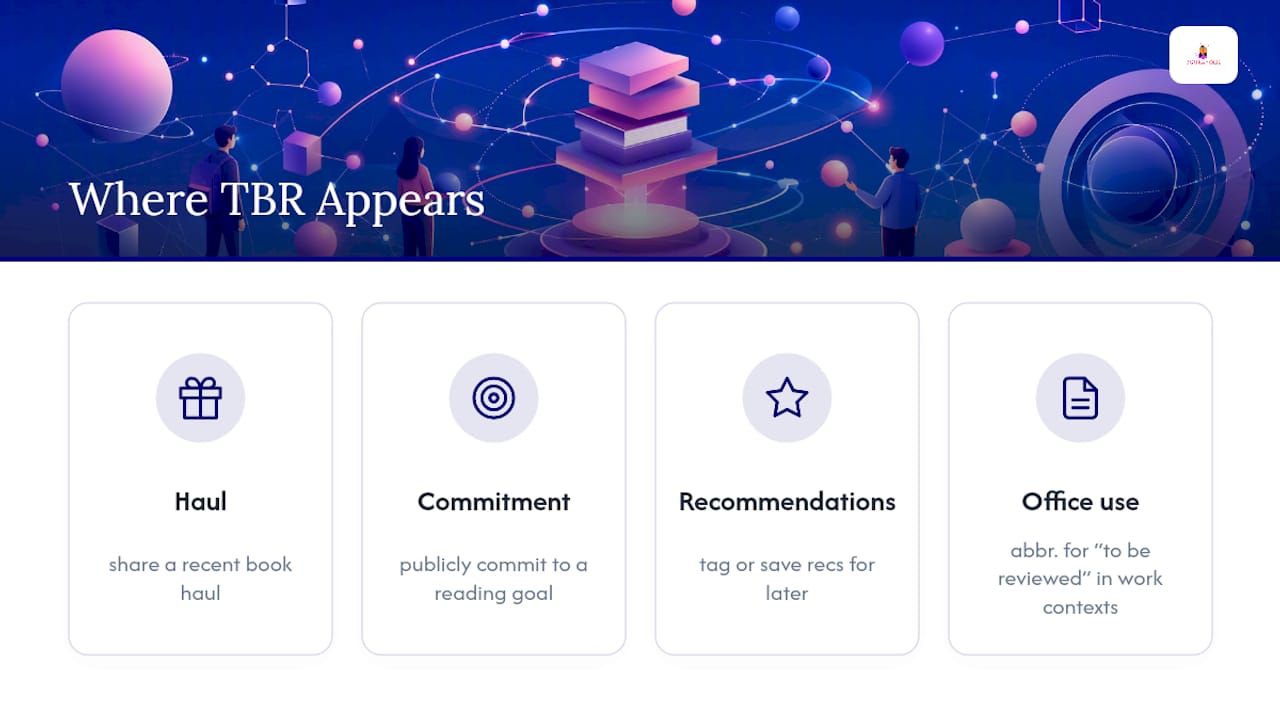
The intent behind these posts usually falls into one of three buckets: sharing a recent book haul, committing publicly to a reading goal, or tagging recommendations for later. One caveat: TBR shows up in office and meeting contexts too, occasionally standing for "to be reviewed" or similar phrases in professional acronym glossaries. If the post has nothing to do with books, you're looking at a different expansion entirely.
What's the Best Way to Track a TBR List?
Readers split their tracking between digital apps and old-fashioned physical piles, and most people end up using a mix of both. Each method solves a slightly different problem.
- Goodreads works best for social discovery. Its "to-read" shelf syncs with friend activity and community ratings, so it doubles as a recommendation engine.
- StoryGraph appeals to readers who want mood and pacing data alongside their list. It tracks reading habits in a way that helps you match a book to your current attention span.
- Fable leans into buddy reads and group discussion, useful if your TBR management doubles as a social activity.
- Project TBR checks library availability against your list, so you know instantly whether a title is sitting on a shelf nearby instead of buried in a hold queue. Project TBR's site explains the availability-check approach directly.
- Simply TBR consolidates books you already have access to, pulling from your library account, Kindle, Audible, and NetGalley, so your backlog reflects what you can actually start reading tonight rather than a wish list. SimplyKyra's breakdown of Simply TBR covers how the import process works.
Physical tracking still holds up for readers who like tangible progress: a dedicated shelf, a growing stack on the floor, or a planner page where you cross off titles by hand. That approach works especially well if you're someone who reads better when a pile is staring back at you. Our own reading habits coverage digs into how unread shelves function as both motivation and mild guilt trip.
How Does TBR Relate to DNF and Other Reading Shorthand?
Every book on a TBR eventually moves in one of three directions: you read it, you abandon it, or it sits there indefinitely. DNF, meaning "did not finish," marks the second outcome, and it's just as common in reading communities as TBR itself.
A handful of other short terms round out the basic reading vocabulary, and knowing them makes forums and Goodreads reviews much easier to parse:
- ARC: advance reader copy, sent before a book's official release
- HC: hardcover edition
- PB: paperback edition
- DNF: did not finish, a book abandoned partway through
- TBR: to be read, the backlog itself
When a title stalls on your TBR for months, ask honestly whether you're still interested. If the answer is no, moving it to a DNF or "unread, removed" shelf clears mental space better than letting it guilt you from the sidelines.
How Do You Actually Get Through a Growing TBR?
A TBR that never shrinks stops being motivating and starts feeling like a chore list. Here's a sequence that works without requiring you to abandon half your list in a panic.
- Purge fast. Scroll your list once and remove anything you added on impulse and no longer feel curious about. Be honest, not sentimental.
- Rank what's left. Sort by mood, deadline (library holds, book club picks), or simply what excites you most right now.
- Schedule small chunks. Commit to a chapter a day or a fixed 30 minute window rather than vague promises to "read more."
- Mix formats. Pair an audiobook for your commute with an ebook for downtime. Switching formats keeps momentum going even on busy weeks.
- Recruit backup. A buddy read or a themed podcast episode adds accountability that a private list can't.
The TBR Stack Planner from ReadingHabit turns a vague pile into an actual schedule with target finish dates, which helps if spreadsheets motivate you more than vibes.
Pro Tip: Pair your TBR with a specific podcast episode instead of a generic goal. Choosing an episode tied to a genre or author you're curious about gives your next read a built-in conversation starter, which makes finishing it feel less like homework.
Why TBR Culture Matters to the Bookaholic Community
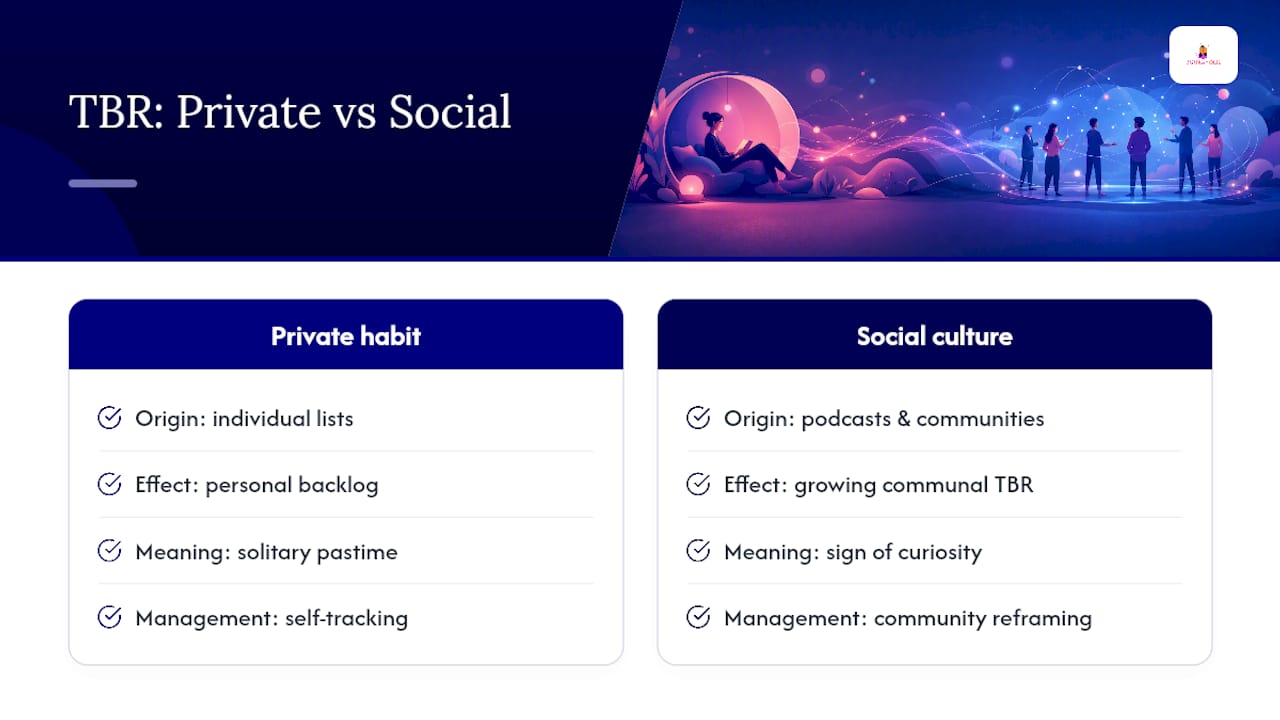
I've watched TBR culture evolve from a private habit into something genuinely social, and that shift is worth paying attention to. The Bookaholic Podcast spends most weeks talking to authors and readers about exactly this: how people find their next book and what keeps them actually reading it. A growing TBR isn't a failure. It's a sign of curiosity outpacing your calendar, which is a good problem to have.
Our episodes on the writing journey and reading habits often double as unofficial TBR fuel, since author interviews tend to surface backlist titles listeners hadn't considered. If your TBR feels unmanageable, browsing reading habit discussions or the community conversations covered in this piece on book fandoms might reframe it as connection rather than clutter.
— Deirdre
What to Explore Before You Trim Your TBR
- USA Today's TBR explainer covers the term's rise in mainstream slang.
- Dictionary lists alternate meanings beyond books.
- Wiktionary's TBR entry documents cross-field usage.
- Simply TBR and Project TBR demonstrate modern backlog tools.
- For a scheduling boost, try Bookaholic's guide to building a reading list you'll finish.