
"Show, don't tell" means using action, dialogue, interior monologue, physical sensation, and sensory detail to let readers feel an emotion instead of being told its name. It matters most in your story's emotional high points, the scenes where grief, love, or fear should land in the reader's body, not just their eyes. Everywhere else, a well-placed sentence of telling keeps your pace honest.
TL;DR:
- Showing relies on specific tools like action, dialogue, and sensory details to imply emotions and scenes, rather than explicitly stating them.
- Replacing vague nouns and weak verbs with precise actions and behaviors enhances emotional depth and clarity in storytelling.
- It is appropriate to tell in situations involving time jumps, factual setups, backstory summaries, or transitional moments to maintain pacing.
- Practice showing through targeted drills, such as replacing emotion words with behavioral details or focusing on one dominant sense per scene.
- Common mistakes include overusing emotion labels, adverb tags on dialogue, filter words, and unnecessary sensory overload, which dilute the impact of showing.
Table of Contents
- What Does "Show, Don't Tell" Actually Mean?
- How Do You Actually Show Instead of Tell?
- When Should You Tell Instead of Show?
- Show Don't Tell Examples: Ten Before-and-After Pairs
- How Can You Practice Showing in Your Own Drafts?
- What Are the Most Common Telling Mistakes?
- A Note From the Bookaholic Editing Desk
- Where to Practice Showing After You Finish This Article
- Sources
- FAQ
What Does "Show, Don't Tell" Actually Mean?
Anton Chekhov put it better than most craft books ever have: don't tell him the moon is shining, show him the glint of light on broken glass. That single image, cited widely as the origin point of the technique, is the whole philosophy in miniature. You're not describing the moon. You're handing the reader one sharp, physical detail and trusting them to build the rest of the scene themselves, according to Wikipedia's entry on the technique.
Ernest Hemingway approached the same idea from a different angle with his Iceberg Theory: a story's real emotional weight sits below the surface, unstated, while only a fraction shows above the water. Cut the explanation, leave the image, and the reader senses the depth anyway. Both writers arrived at the same conclusion from opposite directions. Chekhov built up with specific detail. Hemingway stripped down by omission. Either path gets you to the same destination: prose that trusts the reader to feel something rather than being informed of it.
That trust is the mechanical heart of showing. When you write "she was furious," you've delivered a fact and closed the door on the reader's imagination. When you write "she snapped the pencil in half and set both pieces on the desk, aligned like silverware," you've handed over evidence and let the reader convict the character themselves. Inference is more persuasive than assertion. It's the difference between being told a verdict and watching the trial.
According to the Wikipedia breakdown of the technique, showing relies on five primary tools:
- Action — what a character physically does
- Dialogue — what a character says, and what they avoid saying
- Interior monologue — a character's private, unfiltered thoughts
- Interior emotion — physical or physiological responses to feeling (a tightened jaw, a stomach drop)
- Sensory description — sight, sound, smell, taste, and touch, deployed with restraint
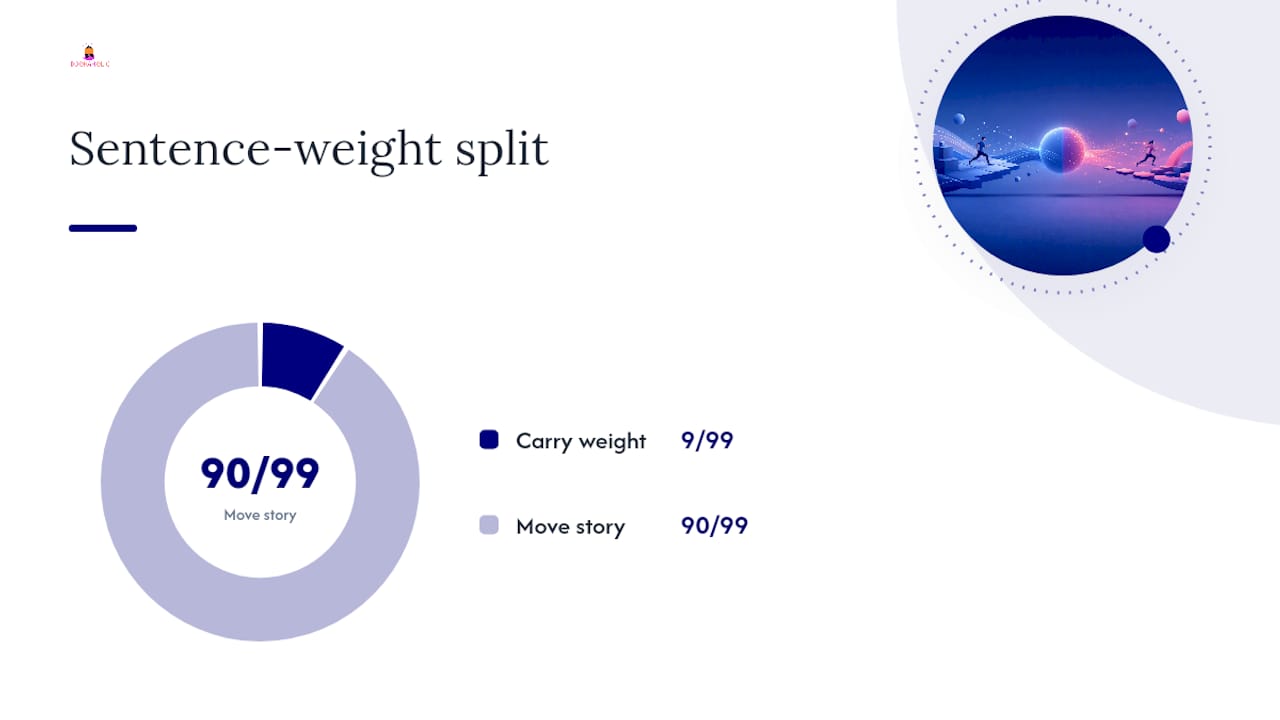
Telling has its own toolkit, and it isn't the enemy. Narrative summary and exposition compress time and deliver information the reader needs without living through it in real time. A story that showed every single beat would be exhausting to read and, frankly, to write. The skill isn't eliminating telling. It's knowing exactly which nine sentences on a page should carry weight and which ninety should simply move the reader forward.
How Do You Actually Show Instead of Tell?
Showing isn't a mood. It's a set of specific, repeatable moves you can apply sentence by sentence. Here are five that cover most situations you'll run into in a draft.
-
Swap vague nouns and weak verbs for precise ones. "He walked to the car" tells us nothing about the man. "He limped to the car, favoring his left knee" tells us he's injured, aging, or both, without a single label. Precision does the emotional work that adjectives are usually drafted to do badly.
-
Choose one dominant sense and commit to it. A scene set in a hospital waiting room doesn't need sight, sound, smell, taste, and touch stacked in one paragraph. Pick the one detail that matters, maybe the antiseptic smell under the coffee machine, and let it carry the scene's atmosphere alone. One well-chosen sensory detail outperforms four generic ones.
-
Let dialogue carry subtext instead of stating feelings outright. If a character is heartbroken, don't write "I'm heartbroken" unless that flatness is the point. Write the character asking about the weather, the traffic, anything but the actual subject, while their hands won't stay still. Readers are remarkably good at hearing what a character isn't saying.
-
Use action beats instead of adverb tags to color a line of dialogue. "'Fine,' she said angrily" is telling with an adverb bolted on. "'Fine.' She slammed the cabinet shut hard enough to rattle the glasses inside" shows the same anger through behavior, and it reads faster because there's an image instead of a label.
-
Reveal interior emotion through microbehavior and physiology, not naming. Fear isn't "he felt afraid." It's a dry mouth, a held breath, a hand that won't stop checking the door lock. The body tells the truth before the narrator has to.
Here's a quick before-and-after to see all five in miniature: Telling: "Maria was nervous about the interview." Showing: "Maria checked her phone for the third time in a minute, then wiped her palm on her skirt before the receptionist could see." Same information, delivered through behavior instead of a label.
Pro Tip: Don't try to hit all five senses in one paragraph just to prove you're "showing." A scene with sight, sound, smell, taste, and touch crammed into three sentences reads like a checklist, not a moment. Practitioners who edit for a living warn that piling on sensory detail is a common way writers mistake volume for craft, according to Judy Penz Sheluk's breakdown of the technique. Pick the detail that's actually load-bearing and cut the rest.
When Should You Tell Instead of Show?
Showing every single moment of your story would be like narrating a road trip by describing each mile marker. Readers need some stretches of highway summarized so they can get to the next destination with their attention intact. Telling earns its place in a handful of specific situations:
- Time jumps. "Three years passed before she returned to the house" does its job in seven words. Showing that gap would mean writing three years of scenes nobody asked for.
- Concise factual setup. If your character needs to know it's Tuesday, or that the meeting starts at nine, just say so. Dramatizing a calendar check wastes the reader's patience.
- Backstory summary. A paragraph explaining that a character's parents divorced when she was eleven can move the plot forward in seconds, where a flashback scene might stall momentum for a page.
- Connective tissue between big scenes. The walk from the car to the front door rarely needs showing unless something important happens during it.
Craft author James Scott Bell and other writing teachers make the case plainly: trying to show every incident will exhaust the reader, and pacing depends on knowing when summary is the more generous choice, according to the same Wikipedia entry on the technique. The rule of thumb that holds up across genres: show the moments your story turns on, and tell the connective tissue between them.
Consider the difference between efficient telling, unnecessary telling, and over-showing side by side. Efficient telling: "By the time the trial started, the town had already convicted him." One sentence, does its job. Unnecessary telling: "John was a very kind man who always helped his neighbors" when the next scene already shows him fixing a fence for free. That's redundant, not efficient. Over-showing: dedicating six paragraphs of physical description to a character walking into a room she's walked into fifty times before, when a single detail (she still flinches at the creak of the third stair) would say more. The telling sentence isn't the enemy. The wrong telling sentence, in the wrong place, is.
Show Don't Tell Examples: Ten Before-and-After Pairs
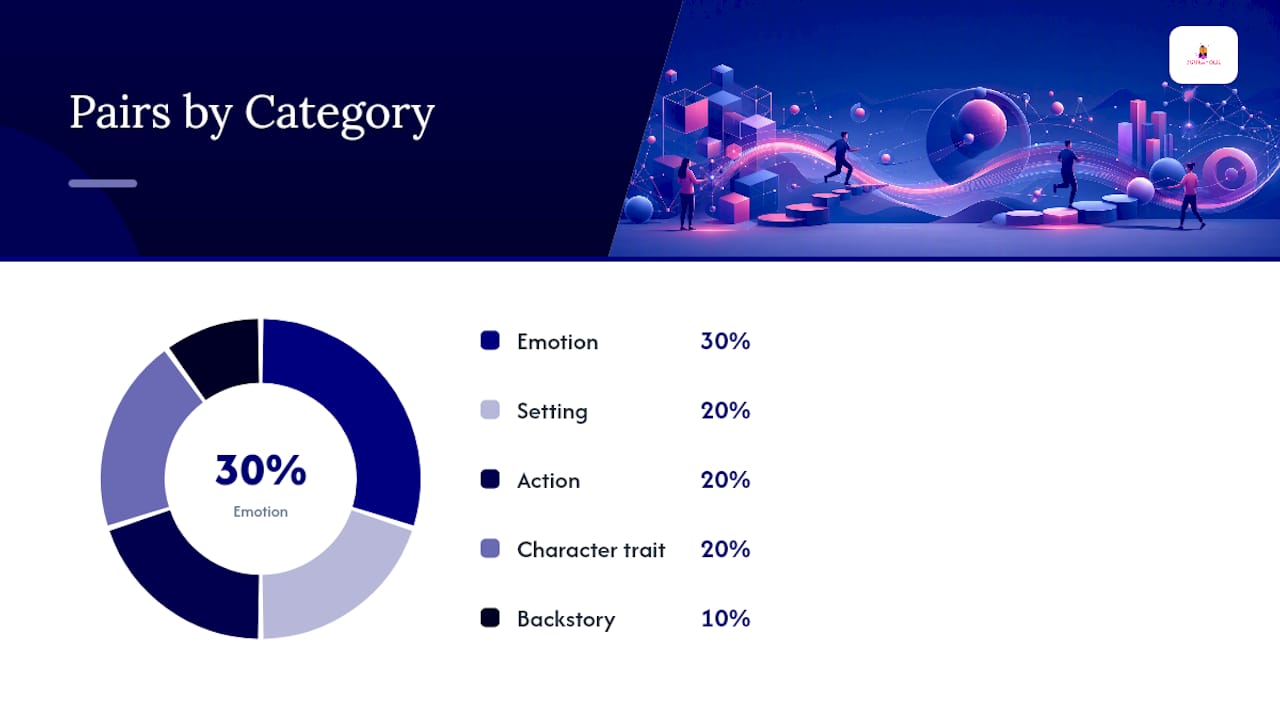
Nothing teaches this technique faster than seeing it in motion. Here are ten pairs organized by what they're revealing: emotion, setting, action, character trait, and backstory. Study the pattern in each rewrite rather than memorizing the sentence itself.
Emotion
- Telling: "David was sad about losing the game." Showing: "David sat alone in the locker room long after the others had showered and left, still wearing his cleats." The isolation and the cleats do what "sad" can't.
- Telling: "Grandma was proud of her garden." Showing: "Grandma walked visitors past every tomato plant twice, narrating each one like a museum tour guide." Pride shown through repetition and behavior, not a label.
- Telling: "Tom felt anxious before the flight." Showing: "Tom counted the exit rows twice, then a third time, even though he already knew the number by heart." Anxiety through a compulsive, physical tell.
Setting
- Telling: "The apartment was messy and neglected." Showing: "A single unwashed mug sat in the sink, its coffee ring dried into a permanent stain, next to three days of unopened mail." Neglect through accumulated small facts, not the adjective itself.
- Telling: "The small town felt poor and forgotten." Showing: "Half the storefronts on Main Street had paper taped over their windows, and the diner's neon sign only lit up the O and the N." Decline shown through specific, verifiable images.
Action
- Telling: "He was clumsy and knocked things over a lot." Showing: "His elbow caught the lamp on the way to the door, and he didn't stop to pick it up." One incident implies the pattern.
- Telling: "The fight was intense." Showing: "Chairs scraped back so hard one tipped over, and nobody moved to right it." Intensity through the room's reaction, not a summary word.
Character trait
- Telling: "Sarah was a generous person." Showing: "Sarah split her lunch in half before anyone at the table asked, like it was just what you did." Generosity shown as habit, not personality description.
- Telling: "He was arrogant and dismissive of others." Showing: "He answered every question before the other person finished asking it." A single behavioral pattern replaces an adjective pileup.
Backstory
- Telling: "She had a difficult childhood full of instability." Showing: "She still packed a bag every time she moved apartments, even after a decade in the same city, just in case she had to leave fast." One current-day habit implies years of history the reader fills in themselves.
Notice that none of these rewrites is longer out of sheer decoration. Each one replaces an abstract label with a concrete, specific, verifiable detail, exactly the approach the Writers Workshop's before/after breakdown recommends as the fastest way to learn the skill. The showing version isn't "better writing" in some vague sense. It's writing that gives the reader a job to do, and readers, it turns out, like having that job.
How Can You Practice Showing in Your Own Drafts?
Reading examples builds recognition. Writing under a timer builds the actual skill. Here's a three-level drill sequence that moves from the smallest unit of prose up to the whole scene, borrowed loosely from the specificity-and-sensory approach the Vanderbilt Writing Studio teaches in its workshops.
-
Sentence-level drill. Take one page of an old draft and circle every emotion word: happy, sad, angry, nervous, embarrassed. For each one, cross it out and replace it with a physical behavior or action that implies the same feeling. Don't reword the emotion. Delete it entirely and let the behavior stand alone.
-
Paragraph-level drill. Choose a descriptive paragraph and identify its one dominant sense. Cut every sentence that doesn't serve that sense, even ones you like. This drill is uncomfortable the first few times because it forces you to kill sentences that sound nice but do no work.
-
Scene-level drill. Before revising a full scene, write one sentence stating what that scene needs to accomplish emotionally. Then go through and show only the details that serve that single priority, cutting or summarizing everything else into a line or two of telling.
Set a timer for 10 to 15 minutes and run one drill against a page you've already written. Bookaholic's writing prompts are built for exactly this kind of focused, short-burst practice if you want fresh material instead of revising something old. Consistency here matters more than duration. Five focused minutes a day beats one exhausting Sunday session.
What Are the Most Common Telling Mistakes?
Most telling hides in a small number of predictable patterns, which is good news, because it means you can hunt for it systematically instead of relying on gut feeling. Run these four searches on any draft:
- Emotion words. Search for happy, sad, angry, scared, nervous, excited, and their variants. Each hit is a candidate for a behavior swap.
- "Was" or "were" plus an adjective. Constructions like "was furious," "were exhausted," or "was beautiful" almost always signal a label standing in for a scene.
- Adverb tags on dialogue. "She said sadly," "he asked angrily," and similar tags usually mean the dialogue itself isn't doing enough work, so an adverb is patching the gap.
- Filter words. Words like "seemed," "felt," "noticed," and "realized" put a layer of narration between the reader and the moment. Cutting them often makes the sentence more direct without losing anything.
Craft resources consistently point to these same four diagnostic searches as the fastest editing shortcut for finding telling in a manuscript, according to the Writers Workshop's guide to the technique. Once you find a hit, the rewrite template is usually simple: replace "was furious" with one specific action, delete the adverb entirely and trust the dialogue, or cut the filter word and let the sensory detail stand on its own.
Pro Tip: When you attempt to fix telling, resist the urge to over-correct by adding paragraphs of description in its place. Showing isn't about writing more; it's about writing the one detail that actually carries the weight. A single load-bearing image beats three decorative ones every time, a distinction Judy Penz Sheluk makes explicitly when warning writers against mistaking volume for craft.
Keep a printable checklist taped above your desk: emotion words circled, "was/were plus adjective" flagged, adverb tags cut, filter words removed, and one dominant sense chosen per scene. Five items, five minutes, real progress on every pass.
A Note From the Bookaholic Editing Desk
We once sat with an author interview transcript where the guest kept saying she was "devastated" by a rejection letter that almost ended her writing career. It read flat on the page, even though her voice on the recording cracked with feeling. The fix wasn't a better adjective. We cut "devastated" entirely and replaced it with the detail she'd actually told us: she kept the rejection letter in her sock drawer for eleven years before she could throw it away. That single image did more work than the label ever could.
That's the whole craft in one small edit. The moments that matter deserve a specific, physical detail, not a summary word standing in for the real thing. We talk through edits like this one regularly on a book podcast, where craft conversations with working authors dig into exactly this kind of revision.
— Deirdre
Where to Practice Showing After You Finish This Article
Reading about showing gets you halfway there. The other half happens on the page, which is where Bookaholic tries to be useful as an ongoing practice hub rather than a one-time craft lesson. Between the podcast's author interviews and the blog's exercises, there's a steady supply of material for writers working to turn labels into scenes.
A few places to start:
- Writing Prompts That Actually Build Your Skills gives you ready-made timed drills if you'd rather practice on fresh material than revise an old draft.
- The Bookaholic landing page is where you'll find literary merchandise for readers and writers who want a small piece of the community to carry around, alongside details on joining the broader Bookaholic circle.
Neither of these replaces the drills above. They're the complement: a place to keep practicing once the checklist becomes habit, and a place to feel like part of a community that takes the craft as seriously as you do. Stop by the landing page when you're ready to browse.
Sources
The guidance in this article draws on a small set of sources worth bookmarking if you want to go deeper on your own.
- Show, don't tell — Wikipedia
- Show, Don’t Tell | Writing Studio | Vanderbilt University
- Show Don't Tell — What It Actually Means With Before and After Examples - The Writers Workshop
- Judy Penz Sheluk — Let’s talk about writing: 'Show, don’t tell'
FAQ
What Is the Point of Show, Don't Tell?
The point is persuasion through inference: readers believe an emotion or a fact more fully when they piece it together from action, dialogue, and sensory detail than when a narrator simply states it. It also slows a reader down at the moments that matter most, which is why it's reserved for emotional high points rather than every sentence in a manuscript.
What Are Some Examples of Show, Don't Tell?
"She was furious" becomes "She set the phone down so carefully it looked like a threat." "He was tired" becomes "He read the same paragraph four times before giving up and turning off the lamp." Ten fuller before-and-after pairs across emotion, setting, action, character, and backstory appear earlier in this guide.
Is Show, Don't Tell Good Advice?
It's genuinely useful advice, but not an absolute rule. Craft writers caution that trying to show every single moment exhausts readers, so the strongest drafts show the scenes a story turns on and tell the connective material in between, according to Wikipedia's overview of the technique.
What Are Some Show, Don't Tell Phrases to Avoid?
Watch for emotion labels like "she was sad" or "he felt angry," "was/were plus adjective" constructions like "was exhausted," adverb-heavy dialogue tags like "she said nervously," and filter words like "seemed" or "realized." Each one is usually a sign a scene is being summarized instead of dramatized, and swapping it for one concrete behavior almost always strengthens the sentence.