Here's the direct answer: this guide gives you a full menu of creative reading challenge ideas, from count goals to bingo cards to project-based themes, plus templates you can copy today. Pick one style, mix a few prompts, or build your own grid, then use our tracking tips to actually finish it. We put this together drawing on experiences hosting a book-focused podcast and talking with readers who've tried (and abandoned) a dozen different systems.
TL;DR:
- If annual count goals lose their appeal, choose a project such as reading one author's novels in publication order to build continuity across the year.
- Before starting a bingo card or count goal, decide whether audiobooks, rereads, novellas, and short stories qualify, then review your pace quarterly.
- A five by five bingo card can be completed in any order, and you can replace a stalled prompt rather than abandon the whole challenge.
- For reluctant or emerging readers, replace page targets with sessions lasting 15 minutes, and allow graphic novels, audiobooks, and short stories to count.
- Choose paper, calendar, or app tracking only if it motivates you; reset targets when visible metrics make reading feel performative.
Table of Contents
- 1. A menu of reading challenge ideas by category
- 2. Copy these ready-to-use challenge templates
- 3. How reading bingo works and prompts to start with
- 4. Habit and tracking tips that keep a challenge alive
- 5. A note on where this guidance comes from
- 6. Tailoring challenges for different ages and reading levels
- 7. Weaving mental health and well-being into a reading challenge
- 8. Why we'd choose a project over a page count
- 9. Join us for more reading inspiration
- FAQ
- Sources
1. A menu of reading challenge ideas by category
Not every reader wants the same thing from a challenge. Some crave structure, others want permission to wander. Here's a spread organized by what motivates you.
Count-based goals work for readers who like visible progress. A classic yearly challenge might aim for a moderate number of books reflecting your life rhythm, rather than an arbitrary round figure. Start smaller than you think you need to.
Monthly or genre rotations give you variety without overwhelm. You might assign each month a lane: January for literary fiction, February for romance, March for nonfiction, and so on, adjusting the list to your own taste.
Project challenges anchor your reading around a single thread for the whole year. These tend to hold interest longer because they build momentum instead of resetting every book.
- Read every novel by one author, in order of publication.
- Spend a year with one decade of fiction, say the 1960s or the 1990s.
- Build a country-focused list: one book per country, or a deep dive into one region's literature.
- Follow a theme study: unreliable narrators, epistolary novels, or books that won a specific prize.
Format switches push you outside habitual choices. Try an audiobook month, a graphic novel sprint, or a week of short fiction and novellas instead of your usual doorstopper. These also double as micro-challenges when you only have scattered pockets of time.
Social and community prompts turn solitary reading into something shared. Buddy reads with a friend, a book club's monthly pick, or a themed readalong hosted by an online group all add accountability and conversation to the mix. If you want writing-adjacent prompts to pair with your reading, our writing prompts that build skill post offers exercises that work well alongside a themed reading project.
2. Copy these ready-to-use challenge templates
You don't need to invent a system from scratch. Here are three templates you can adapt in minutes.
- Monthly prompt calendar. Assign one prompt per month (a debut novel, a translated work, a reread of a childhood favorite) and fill it with any book that fits, swapping prompts around if a month gets busy.
- 52-week prompt set. Break the year into weekly categories grouped by theme (five weeks of mystery, five of memoir, and so on), so you always know what's next without overplanning.
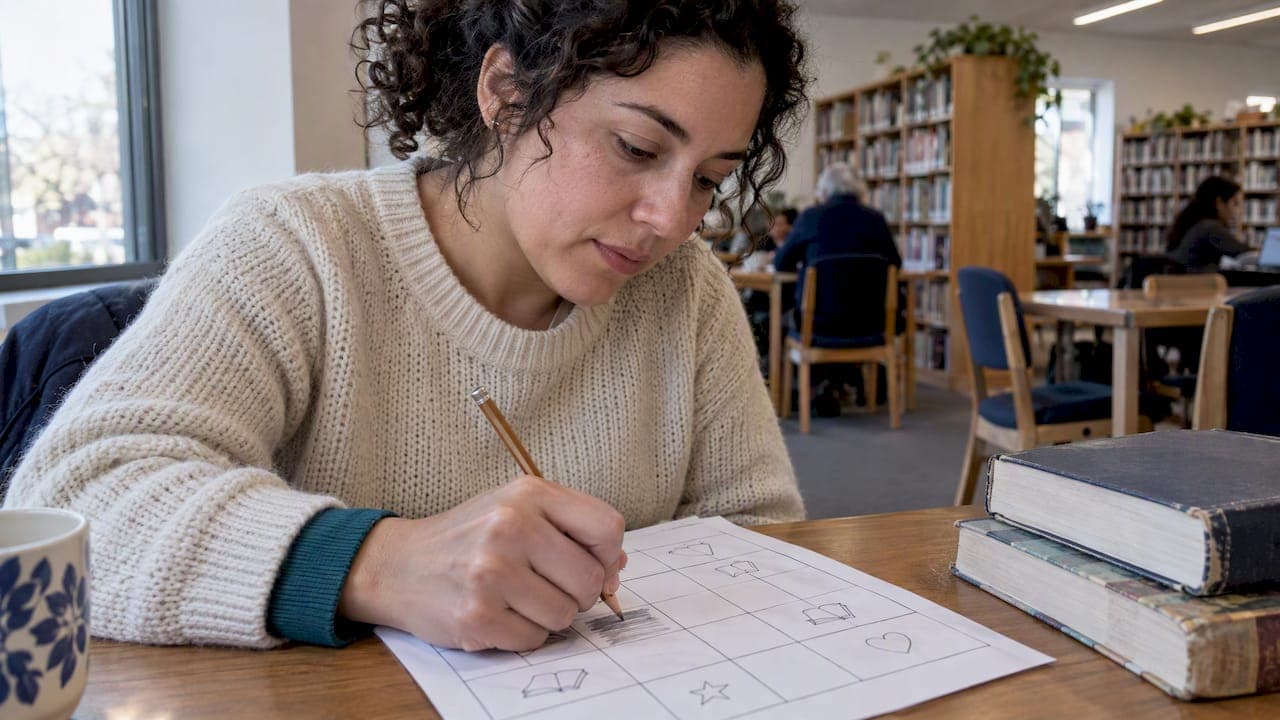
- Blank bingo grid. A 5x5 grid with one prompt per square, filled in any order, completed when you've covered a row, column, or the whole card.
A few rules keep any of these templates honest:
- Decide upfront whether audiobooks, re-reads, novellas, and short stories count toward a square or a count goal.
- Set a checkpoint every quarter to see if your pace still feels realistic.
- Scale difficulty by shrinking the grid or count goal rather than abandoning the challenge entirely.
3. How reading bingo works and prompts to start with
Reading bingo swaps a rigid list for a grid of prompts you fill in any order, which makes it one of the more forgiving challenge formats. Public libraries have leaned into this format for years: the Kansas City Public Library's Book Bingo program offers printable sheets and librarian-curated booklists for each square, and Seattle Public Library's 2026 Book Bingo explicitly counts audiobooks toward its categories, with staff-curated reading suggestions for every square.
A starter 5x5 set might include squares like these:
- A book published the year you were born.
- A book under 200 pages.
- A book in translation.
- An audiobook narrated by the author.
- A book recommended by a Little Free Library browse.
Pro Tip: Swap any square that stalls you for one you're excited about. The grid is a tool, not a contract.
Printable sheets from library programs are a fast way to start, or you can build a custom card with a bingo card generator using your own prompt list.
4. Habit and tracking tips that keep a challenge alive
Most reading challenges die from friction, not lack of interest. Habit stacking fixes this by attaching reading to something you already do automatically: after your morning coffee, before you check your phone at night, open a book for 15 to 20 minutes, using habit stacking to build reading that lasts.
For tracking, keep it low-friction:
- A paper log or bullet journal spread, simple and private.
- A wall calendar where you mark an X for each reading session.
- A tracking app or platform, if visual progress motivates you more than words on paper.
Accountability helps too: a reading buddy, a small public check-in, or a monthly post to a book club thread all work. One caution worth taking seriously, expert guidance notes that chasing visible metrics can make reading feel performative rather than enjoyable, so recalibrate your targets at each checkpoint and let enrichment, not optics, drive the pace.
Reading stays worth doing when the goal serves you, not the other way around, according to habit-building research that favors prioritizing dedicated time and personal enjoyment over raw volume.
If a slump hits mid-challenge, our 30-day reading slump guide walks through diagnosing what's actually stalling you.
5. A note on where this guidance comes from
The Bookaholic Podcast, hosted by Deirdre Pippins, features author interviews, book reviews, and conversations on the writing journey and mental health. Our reading habits archive and reading list guide offer deeper, ongoing support for whichever challenge you pick.
6. Tailoring challenges for different ages and reading levels
A challenge built for a confident adult reader will frustrate a reluctant teen or a seven-year-old just finding their footing. For younger readers, shrink the grid: a 3x3 bingo card with picture-book and early-reader squares feels achievable instead of distant. Family-friendly calendars, like those built around NEA's Read Across America resources, can anchor a classroom or household challenge to a shared theme.
For reluctant or emerging readers, swap page-count goals for time-based ones (15 minutes counts, regardless of how far you get) and let graphic novels, audiobooks, and short stories fill squares meant for longer prose. Choice matters more here than structure: a prompt like "pick any book with a dog on the cover" invites browsing instead of obligation.
Teens often respond well to project challenges with a social hook, like a buddy read with a friend or a themed readalong tied to a show or movie adaptation. Adult readers balancing work and family might prefer micro-challenges (a week of short fiction, a single-author sprint) over year-long commitments that compete with everything else on the calendar. Whatever the age group, the same principle holds: the challenge should bend to the reader, not the reverse.

7. Weaving mental health and well-being into a reading challenge
Reading challenges can double as quiet acts of self-care when you build prompts around that intention rather than treating the habit as another box to check. A square or monthly prompt like "a book about grief" or "a memoir on recovery" invites reflection, while a lighter prompt like "a comfort reread" gives permission to return to something familiar instead of always chasing the new.
Pacing matters as much as content. Building in a rest month, or a prompt that simply says "reread anything," prevents the challenge from becoming another source of pressure. The habit-stacking guidance we mentioned earlier applies directly here: anchoring reading to a calm moment in your day, rather than squeezing it into stolen minutes, makes the practice restorative instead of rushed.
Journaling alongside your reading, even a sentence or two about how a book made you feel, adds a reflective layer without turning the challenge into homework. If you want structured prompts for that kind of reflection, our writing prompts post offers exercises that pair naturally with a reading journal. The goal isn't to optimize your year of reading. It's to let books do what they've always done well: give you somewhere to sit with your own thoughts for a while.

8. Why we'd choose a project over a page count
Project challenges hold up better over a full year than raw count goals. A listener once told us a single-author deep dive saved her reading year when nothing else stuck. Borrow the template, then shape it around your own life.
— Deirdre
9. Join us for more reading inspiration
Our podcast and community exist for exactly this kind of reading adventure. Subscribe to the Bookaholic Podcast for author interviews and challenge talk, including our 2022 reading challenge episode, and browse our literary merchandise to bring a little of that bookish energy into your everyday life.
FAQ
What are some ideas for a reading challenge in 2026?
Strong options for 2026 include library bingo cards, single-author or single-decade projects, and monthly genre rotations. Seattle Public Library's 2026 Book Bingo publishes staff-curated suggestions for each category, including timely ones tied to the year's events.
What are some good reading challenge games?
Reading bingo is one of the most popular game-style formats, letting you fill a grid of prompts in any order rather than following a fixed list. Buddy reads and book club readalongs add a social, game-like layer through shared check-ins and friendly competition.
What are some good ideas for a reading journal challenge?
A reading journal challenge pairs each book with a short reflection, such as one sentence on how it made you feel or a quote worth remembering. Combining this with themed prompts, like a memoir on recovery or a comfort reread, turns the journal into a record of both your reading and your mood across the year.
What are some fun reading activities?
Format-swap sprints (a week of audiobooks, a weekend of graphic novels) and prompt swaps with a reading buddy keep things playful. Borrowing a surprise pick from a Little Free Library box is another low-pressure way to add spontaneity to any challenge.
Sources
- How to build a reading habit that lasts (habit stacking) — Cristina Barata
- Book Bingo — Kansas City Public Library
- 2026 Book Bingo reading suggestions — Seattle Public Library