
A curated mix of CBT workbooks, clinical overviews, memoirs, and select fiction supports readers best, because depression touches thought patterns, biology, and identity all at once. For a well-rounded shelf, start with Feeling Good for skills, Undoing Depression for the clinical picture, Reasons to Stay Alive for lived experience, and The Bell Jar for fiction that names what words often miss.
TL;DR:
- Most effective treatments focus on practical skills like CBT exercises, lifestyle changes, or understanding depression as a systemic condition, not just symptoms.
- Books like Feeling Good and The Depression Cure offer structured exercises and daily routines, ideal for active skill-building or improving habits.
- Memoirs and fiction such as Darkness Visible or The Bell Jar help reduce isolation by naming emotional experiences but contain content that may be triggering during a crisis.
- Choosing the right book depends on your current needs: symptom management, understanding the condition, feeling less alone, or supporting others.
- Cultural and individual differences shape how depression is experienced and described, so seeking titles relevant to your background enhances understanding and comfort.
Table of Contents
- Books About Depression Worth Reading, Organized by Category
- Why These Books Actually Help
- How to Use These Books Without Going It Alone
- Reading Safely: Trigger Warnings and When to Pause
- How Book-a-holic Selects and Vets These Picks
- Books for Teens, Veterans, and New Parents Facing Depression
- How Different Cultures Understand and Write About Depression
- Which Depression Books Actually Work Best, and for Whom
- Recognizing Different Types of Depression in Literature
- What Family and Friends Should Read
- A Host's Note on Reading Through It
- Keep the Conversation Going With Bookaholic
- Sources
- FAQ
Books About Depression Worth Reading, Organized by Category
Every reader who searches for books about depression is really asking a narrower question: which one fits where I am right now? Someone newly diagnosed wants a different book than someone who has lived with depression for a decade and wants company, not instruction. Below is a shelf organized by what each title actually does, so you can match the book to the moment.
Self-help and CBT workbooks
Feeling Good: The New Mood Therapy by David D. Burns remains one of the most frequently recommended entry points into cognitive behavioral therapy for a reason: it turns therapy concepts into worksheets you can do at your kitchen table. Burns breaks down cognitive distortions (all-or-nothing thinking, catastrophizing, mental filtering) and gives you drills to argue back against them. It's dense with exercises, which makes it best for readers who want structure over story.
The Depression Cure by Stephen S. Ilardi takes a different route into the same goal. Ilardi, a clinical psychologist, built his "Therapeutic Lifestyle Change" program around six changes: exercise, omega-3 intake, sunlight exposure, social connection, sleep, and rumination reduction. It reads more like a program manual than a workbook, and it leans on the same research base that supports exercise as an effective component of depression treatment. If workbook fatigue has set in, this is the practical, action-oriented alternative.

For readers who want more workbook options in digital form, eBook Warehouse's list of CBT ebooks rounds up free and publisher-backed titles worth comparing against the print classics above.
Clinical and evidence-based overviews
Undoing Depression by Richard O'Connor, PhD, is the book to hand someone who wants to understand depression as a whole system rather than a single symptom. O'Connor treats depression as a set of habits, roughly forty million American adults live with the condition, and he argues that no single fix, whether medication, therapy, or willpower, resolves something that touches behavior, relationships, and biology simultaneously. That multi-front framing is why clinicians often recommend it alongside more narrowly focused workbooks.
The Noonday Demon: An Atlas of Depression by Andrew Solomon sits in its own category. Solomon won the National Book Award for this book, and it blends personal memoir with reporting on the history, biology, and cultural politics of depression across cultures and eras. It's long. It's also the closest thing to a definitive reference many readers will find, useful for anyone who wants both the science and the felt experience in one binding.
The Secret Strength of Depression by Frederic Flach offers a less common angle: depression as a disruption that, handled well, sometimes produces psychological growth. Flach's psychiatric background grounds the argument, but it's worth reading as one clinician's framework rather than a universal claim.
Memoirs of lived experience
Darkness Visible by William Styron is the memoir most literary readers reach for first. Styron, the novelist behind Sophie's Choice, wrote this short account of his own descent into suicidal depression in the late 1980s, and its precision of language, describing depression's texture rather than just its symptoms, is why it still gets assigned in psychology courses decades later. It contains direct discussion of suicidal ideation, so approach it when you're in a steadier place.
Reasons to Stay Alive by Matt Haig takes a more conversational, structured approach: short chapters, lists, direct address to the reader. Haig wrote it from the vantage point of recovery, which gives it a different emotional register than Styron's book, more hope-forward, less claustrophobic. It's frequently the memoir recommended to readers who find longer literary works too heavy during an active depressive episode.
Fiction that captures depression from the inside
The Bell Jar by Sylvia Plath is the novel most often cited when people search for fiction about depression, and it earns that reputation through Esther Greenwood's flat, precise narration of her own unraveling. Plath wrote it shortly before her death, which adds a layer of weight to the reading experience. The book includes suicide attempts and psychiatric hospitalization in detail, making it one to read with care, ideally not during a crisis.
Beyond the essential eight, ADAA maintains a list of clinician-written self-help books for depression and anxiety that's worth checking for newer titles as clinicians update the recommendations. If your reading habits have stalled entirely, a diagnostic approach to reading slumps can help you figure out whether the barrier is the book or the moment.
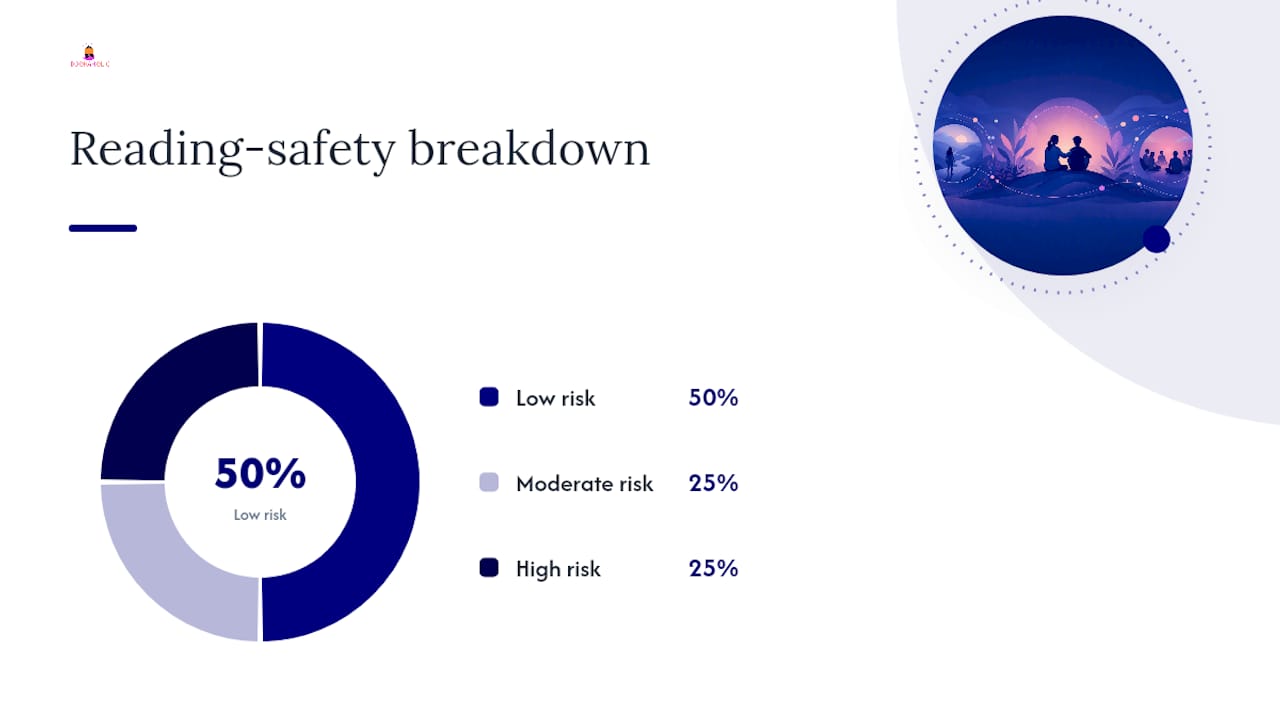
| Title | Category | Best for | Reading-safety note |
|---|---|---|---|
| Feeling Good | CBT workbook | Structured, exercise-driven learners | Low risk |
| The Depression Cure | Lifestyle program | Readers wanting a daily action plan | Low risk |
| Undoing Depression | Clinical overview | Big-picture understanding | Low risk |
| The Noonday Demon | Science and memoir | Deep, long-form readers | Moderate; discusses suicide history |
| The Secret Strength of Depression | Psychiatric perspective | Readers curious about post-depression growth | Low risk |
| Darkness Visible | Memoir | Literary readers wanting precision | High; direct suicidal ideation content |
| Reasons to Stay Alive | Memoir | Readers early in recovery or overwhelmed by density | Moderate |
| The Bell Jar | Fiction | Readers who process through narrative | High; detailed suicide attempts |
Why These Books Actually Help
Books work on depression through a few specific mechanisms, not vague inspiration. CBT workbooks teach measurable skills: identifying a distorted thought, writing it down, and testing it against evidence is a repeatable exercise, and that repetition is what builds new mental habits over weeks, not one reading session.
Clinical overviews like Undoing Depression do something different. They reduce stigma and increase self-management by giving readers a map of the condition, which matters because the National Institute of Mental Health notes that understanding treatment options is often the first step toward pursuing them. Readers who understand why they feel a certain way tend to engage with treatment more consistently than those working from confusion or shame.
Lifestyle-based books draw on a separate research thread. Cochrane's review on exercise and depression finds physical activity can be an effective treatment component, and the National Center for Complementary and Integrative Health has compiled evidence on mindfulness practices that overlaps with what books like The Depression Cure recommend.
Memoir and fiction work through a different channel entirely: naming. The idea that putting language to an emotional experience helps regulate it, often summarized as "name it to tame it," explains why a passage in Darkness Visible or The Bell Jar can land harder than a clinical description of the same symptom. Fiction and memoir supply the words readers didn't have yet.
A very large number of American adults live with depression at any given time, according to figures cited in Undoing Depression, and that scale is exactly why no single book, or single approach, covers everyone.
- CBT workbooks: build cognitive skills through repeated practice
- Clinical overviews: reduce stigma, increase self-management
- Lifestyle programs: apply exercise and behavior-change evidence
- Memoir and fiction: name emotions and reduce isolation through story
How to Use These Books Without Going It Alone
A book works best as a companion to care, not a replacement for it. Here's how to actually use one:
- Pick based on your current state, not your ambition. If you're in a low period, start with a memoir written from recovery (Haig) rather than one written from inside crisis (Styron or Plath).
- Treat workbooks like a course, not a novel. Do one exercise from Feeling Good a day rather than reading three chapters in one sitting. The skill only sticks through repetition.
- Log what you notice. A simple notebook tracking which exercises helped, or which passages felt too heavy, gives you and a therapist something concrete to discuss.
- Bring the book into therapy sessions. Mention specific chapters or exercises rather than summarizing the whole book; therapists can help you apply a CBT technique correctly instead of guessing.
- Choose your format deliberately. Audiobooks work well for memoir, where voice and pacing matter; print or e-book works better for workbooks, where you need to flip back to exercises.
Pro Tip: If a workbook exercise brings up something heavier than expected, stop and write down just the fact of what happened rather than pushing through the rest of the chapter. That note becomes useful material for your next therapy session instead of a private crisis.
If you're choosing your very first title, match it to a concrete goal: understanding (Undoing Depression), skill-building (Feeling Good), or feeling less alone (Reasons to Stay Alive).
Reading Safely: Trigger Warnings and When to Pause
Several titles on this list, The Bell Jar, Darkness Visible, and parts of The Noonday Demon, contain detailed depictions of suicidal ideation, suicide attempts, or psychiatric hospitalization. Before starting any memoir or novel about depression, check a content-warning summary or reader review specifically for these elements, not just a general plot description.
Practical safety habits make a real difference:
- Read heavier material earlier in the day rather than right before bed, when rumination is harder to interrupt.
- Have a grounding plan ready (a phone call, a walk, a specific person to text) before you start a book you suspect will be intense.
- Pause mid-chapter if a passage feels too close to your own experience; finishing the book is never more urgent than your safety.
- Avoid reading detailed suicide narratives entirely during an active crisis.
If reading brings up thoughts of self-harm, contact the 988 Suicide and Crisis Lifeline or SAMHSA's National Helpline, and call 911 or go to an emergency room if you're in immediate danger.
How Book-a-holic Selects and Vets These Picks
Every title on this list had to clear a specific bar: is it clinician-recommended, is it evidence-based where it makes clinical claims, does it carry real narrative power, and is it actually readable for someone whose energy and focus depression has already worn down. Books that only sound authoritative without backing didn't make the cut.
A few Book-a-holic favorites beyond the essential eight:
- Feeling Good, for anyone who wants a skill they can practice today, not just a concept to understand.
- Reasons to Stay Alive, for its short-chapter format that respects how hard sustained reading gets during a depressive episode.
- The Noonday Demon, for readers who want one book that covers the science, the history, and the felt experience at once.
The host of a book podcast has spent years pairing personal reading recommendations with author conversations about mental health, and the podcast's back catalog reflects an ongoing interest in how writers process difficult material into books that help other people.
Books for Teens, Veterans, and New Parents Facing Depression
Depression doesn't look the same across every population, and a book that helps a college student may miss entirely for a new mother or a returning service member. Teen depression often presents as irritability and withdrawal rather than obvious sadness, so books written specifically for younger readers, framed around identity and peer pressure rather than clinical vocabulary, tend to land better than adult-oriented titles.
Postpartum depression carries its own literature separate from general depression books, largely because the hormonal and identity-related triggers differ so much from typical onset. Readers navigating postpartum depression often do better starting with a book written specifically for new parents rather than a general title like Feeling Good, since the exercises in general CBT workbooks don't address the sleep deprivation and identity disruption unique to this period.
Veterans face a related but distinct issue: depression frequently overlaps with PTSD, and general depression memoirs can miss the specific weight of combat-related trauma or the transition back to civilian life. A book written by or for veterans usually addresses that overlap directly, where a civilian memoir like Darkness Visible, however well written, simply wasn't built to.
The common thread across all three groups: population-specific books validate a specific experience of depression, which general titles, even excellent ones, can't always replicate.
How Different Cultures Understand and Write About Depression
Depression isn't experienced or described the same way across cultures, and The Noonday Demon devotes significant space to this variation, tracing how different societies frame the condition through religion, family structure, and stigma. In some cultures, depression is discussed almost entirely through physical symptoms, fatigue, pain, appetite change, rather than emotional language, which changes both how people describe it and how they seek help.
Stigma also varies sharply by cultural context. Andrew Solomon's reporting in The Noonday Demon includes interviews across continents, showing that in some communities depression is treated primarily as a spiritual or moral failing rather than a medical condition, which shapes whether people pursue treatment at all. Reading across these cultural framings helps readers recognize that their own culture's assumptions about depression, whatever they are, represent one lens among several rather than a universal truth.
This matters practically: if a book's framing of depression feels foreign to your own cultural background, that's not a flaw in you or the book. It's worth seeking out additional titles, memoirs from writers who share more of your cultural context often fill gaps that a single, dominant Western narrative leaves open.
Which Depression Books Actually Work Best, and for Whom
No single book outperforms all the others across every reader, because "effectiveness" depends entirely on what a reader needs. A CBT workbook like Feeling Good produces measurable skill gains for readers willing to do the exercises, but it does little for someone who mainly needs to feel less alone. A memoir like Reasons to Stay Alive excels at reducing isolation but doesn't teach a single concrete coping technique.
The comparison that matters most isn't title against title. It's category against reading goal. If your goal is symptom management, workbooks and lifestyle programs like The Depression Cure have the strongest evidence behind them. If your goal is understanding what's happening to you, clinical overviews like Undoing Depression or The Noonday Demon do that better than any memoir. If your goal is feeling seen, memoir and fiction consistently outperform clinical writing, because they operate on emotional recognition rather than instruction.
Reader reviews reflect this split constantly: people rate Feeling Good poorly when they wanted comfort and rate Darkness Visible poorly when they wanted tools. Match the book to the goal first, and most disappointment disappears.
Recognizing Different Types of Depression in Literature
Books about depression rarely specify which type of depression they're addressing, which can confuse readers looking for their own experience on the page. Major depressive disorder, the type most memoirs describe, involves sustained low mood and loss of interest lasting weeks or longer, and it's what Styron and Haig both write about directly.
Persistent depressive disorder (formerly called dysthymia) is longer-lasting but often less severe day to day, and it shows up less often in memoir simply because its subtler, grinding quality makes for less dramatic narrative. Bipolar depression, the depressive phase of bipolar disorder, gets covered in some memoirs but requires different treatment entirely, so a reader with bipolar depression using a unipolar-focused workbook like Feeling Good may find some techniques don't map cleanly onto their experience.
Seasonal patterns and postpartum onset represent still other variations, each with distinct triggers and treatment emphases. Before assuming a memoir's experience mirrors your own diagnosis, it helps to check what type of depression the author describes, since a book's emotional resonance doesn't guarantee clinical accuracy for a different subtype.
What Family and Friends Should Read
Depression rarely stays contained to one person, and books written specifically for supporters address a different problem entirely: how to help without over-functioning, enabling avoidance, or burning out yourself. Undoing Depression includes sections aimed directly at partners and family members, framing depression as a household issue rather than only an individual one.
For friends and family who want a shorter, more relational read, memoir often works better as an education tool than clinical guides, because it shows what depression feels like from the inside rather than listing symptoms. Reading a memoir like Reasons to Stay Alive alongside someone you're supporting can open conversation more naturally than handing them a self-help book aimed at the person with depression.
If you're supporting someone and want to build broader emotional literacy for the relationship, books focused on self-compassion offer a complementary angle, useful for supporters managing their own stress alongside someone else's depression.
A Host's Note on Reading Through It
Every list like this one comes from somewhere personal, and this one comes from years of conversations about how writing and reading intersect with mental health on the Bookaholic Podcast. Books don't replace a therapist or a psychiatrist. They're companions, something to underline, argue with, or feel less alone beside, while the real clinical work happens elsewhere. One recent conversation on the podcast touched on how writers process their own mental health struggles into work that helps readers name theirs, and that exchange shaped several picks on this list.
— Deirdre
Keep the Conversation Going With Bookaholic
Reading about depression works best alongside conversation, not in isolation, and that's exactly where the Bookaholic Podcast fits into your routine after you close one of these books. Unlike a therapy workbook or a clinical guide, some book podcasts give listeners author interviews and community discussion around the writing and recovery process itself.

If a memoir on this list left you wanting to hear more about the writer's process, the author interview on chasing a creative dream against long odds shows how one writer navigated personal struggle into published work, a useful listen for anyone drawn to the memoir category above. For readers who prefer audio formats generally, especially relevant given how many memoirs on this list work better heard aloud, the conversation with Audiofile Magazine's editor Robin Whitten covers what makes an audiobook narration land emotionally. Bookaholic isn't a treatment resource, it's a place to keep thinking about what you read and connect with other readers doing the same. Start with either episode, and see where the conversation takes you next.
Sources
- NIMH — Depression
- ADAA Books: Depression
- Cochrane — Exercise for depression
- SAMHSA — National Helpline
If a book raises more questions than it answers, or if symptoms feel unmanageable, findtreatment.gov and SAMHSA's helpline connect you to licensed treatment providers directly.
This article is general information, not a substitute for advice from a qualified doctor. Consult a qualified healthcare professional about your own circumstances before acting on anything here.
FAQ
Can you live a normal life with depression?
Yes. Depression is treatable, and most people manage it successfully through some combination of therapy, medication, lifestyle changes, and support, with books like Feeling Good and Undoing Depression often used as companion tools alongside professional care.
What are some good books for people with depression?
Feeling Good for CBT skills, Undoing Depression for a clinical overview, Reasons to Stay Alive for memoir written from recovery, and The Bell Jar for fiction that captures the experience from the inside are strong starting points across categories.
What are the saddest books people commonly recommend?
The Bell Jar and Darkness Visible are among the most frequently cited for their unflinching honesty about depression and suicidal ideation; both carry strong content warnings and are best read outside a crisis period.
What diet is recommended for people with depression?
The Depression Cure recommends increased omega-3 intake as one part of a broader lifestyle program, alongside exercise, sunlight, sleep, and social connection, an approach consistent with Cochrane's findings on exercise as an effective treatment component.
Should I read about depression while I'm actively struggling?
It depends on the book: lifestyle programs and clinician-written overviews are generally safe reading at any point, while memoirs and fiction with graphic content, like The Bell Jar, are better saved for steadier moments or read alongside support.