
A query letter has one job: convince an agent to ask for pages. It needs to read like a pitch, not a plot summary, and it belongs on a single page, roughly 200 to 450 words, pasted directly into the email rather than attached. From here, we'll walk through the anatomy, the line-level craft, and the checklist that turns a shaky draft into one worth sending.
TL;DR:
- Build the hook around a protagonist and inciting event, a high concept, or immediate stakes; cut backstory and read it aloud for breath.
- Choose one to three titles published within the last few years, explain their shared tone or appeal, and avoid comparisons that imply bestseller status.
- Send eight to twelve queries per batch, then use response patterns to revise before approaching the rest of your agent list.
- Complete and polish fiction and memoir before querying, but nonfiction agents often consider proposals; place nonfiction credentials before the pitch because authority sells the idea.
- Treat a single form rejection as agent fit, but reconsider the manuscript when multiple full requests produce the same specific criticism.
Table of Contents
- Query letter anatomy: the elements every one needs
- Write a hook that opens requests: three proven line formulas
- Choosing and phrasing comps that actually help
- Author bio: what to include for fiction and nonfiction
- Formatting and submission mechanics agents expect
- Annotated query letter example you can model
- Personalize your query without wasting an afternoon
- Common mistakes and a compact pre-send checklist
- Bookaholic resources and mini drills to sharpen your query
- How to handle rejections and follow-ups
- Tips for querying multiple agents simultaneously
- Adapting query letters for different genres
- Using query letter templates or tools effectively
- Why great queries matter more than writers expect
- How Bookaholic helps you keep building your craft
- FAQ
- Sources
Query letter anatomy: the elements every one needs
Every strong query follows the same skeleton, even when the voice inside it varies wildly from writer to writer.
- Salutation: addressed to a named agent, never "Dear Agent."
- Hook: one sharp line that captures premise and tone.
- Story summary: a brief paragraph covering protagonist, conflict, and stakes.
- Metadata: title, approximate word count, and genre.
- Comps: a few comparable titles that indicate audience and tone.
- Bio: a brief line establishing relevant credentials or platform.
- Closing: a thank-you and a clear offer to send the full manuscript.
Fiction queries save the bio for last, after the story has done its work. Nonfiction proposals often front-load credentials, since the pitch is selling the author's authority as much as the idea itself.
Write a hook that opens requests: three proven line formulas
The opening line decides whether an agent keeps reading, so it earns the most revision time of any sentence in the letter.
- Protagonist plus inciting incident: name the character, then the event that upends their life. "When her sister vanishes during a blackout, Maren has forty-eight hours to find her before the city's lights come back on."
- High concept: state the premise as a collision of two familiar ideas. "A hitman inherits his target's identity, and her debts, when she dies mid-contract."
- Stakes or twist: open with the consequence rather than the setup. "If Imogen doesn't win the inheritance trial by Friday, her family loses the only home they've ever known."
A weak draft like "Sarah has always loved the ocean, and now she must decide what to do with her life" becomes sharper once backstory is cut: "Sarah has six days to choose between the research vessel and the man asking her to stay." Active verbs and immediate stakes beat scene-setting every time.
Pro Tip: Read your hook aloud. If it takes more than one breath, the sentence is doing too much.
Choosing and phrasing comps that actually help
Comps tell an agent who will buy the book and how to sell it, so vague or outdated ones waste the sentence entirely.
- Choose one to three titles published within the last few years, since older comps read as dated.
- Name the specific element each comp shares: tone, structure, premise, or reader appeal, not just genre.
- Use a template like "The Night Circus meets Six of Crows in atmosphere and pacing" rather than listing titles with no context.
- Avoid phrases like "the next" or "the new" paired with a bestselling author's name. It reads as overreach rather than confidence.
Author bio: what to include for fiction and nonfiction
A bio exists to answer one quiet question: why is this person qualified to tell this story? Fiction bios stay short, usually one or two lines, naming relevant publication credits or a day job that adds flavor or credibility. "Jordan Reyes is a paramedic in Chicago and a graduate of the Tin House Workshop" tells an agent enough without padding. Nonfiction bios often move earlier in the letter and lean on measurable platform: a TED Talk, bylines in recognized outlets, or speaking engagements that prove an existing audience.
Formatting and submission mechanics agents expect
Technical missteps sink good ideas before an agent ever reaches the pitch itself. A query letter runs about 200 to 450 words, roughly one page, because agents read hundreds of these and brevity signals control over the material.
- Paste any requested sample pages directly into the email body; unsolicited attachments often get deleted unread for security reasons.
- Include a synopsis only if the agent's guidelines ask for one.
- If an agent requests the first fifty pages, send fifty pages or the nearest chapter break; a page or two over rarely causes rejection on its own.
- For nonfiction, agents frequently work from a proposal rather than a finished manuscript, while fiction and memoir should be complete and polished before querying.
Annotated query letter example you can model
Here's a compact model you can adapt, with the function of each line noted alongside it.
Dear Ms. Alvarez,
When a blackout strips her city of power for a week, Nadia Osei discovers her neighbors are more dangerous than the dark. [Hook: stakes-first, no backstory.]
THE LONG NIGHT is an 85,000-word thriller for readers of Bel Canto and The Push in its claustrophobic tension and unreliable narration. [Metadata and comps, paired for efficiency.]
Nadia has spent six years avoiding her building's tenant association. When the lights fail citywide, old grudges resurface, and one neighbor's secret becomes the only way out. [Summary: two sentences, one turn.]
I'm a former ER nurse and this is my debut novel. [Bio: one line, relevant credential.]
Thank you for your time and consideration. The full manuscript is available upon request. [Closing: direct, no padding.]
Sincerely, [Name]
For a YA swap, the hook would center a teenage protagonist's immediate world (school, family, friend group) rather than adult institutional stakes. For nonfiction, the metadata line would follow the credentials instead of the hook.
Personalize your query without wasting an afternoon
A personalized line takes thirty seconds to write and tells an agent you did the research instead of mass-blasting a list.
- Check the agent's current manuscript wishlist for stated interests that match your book.
- Scan recent client titles they've sold to find tonal overlap worth naming.
- Look for a recent conference talk or social post where they described what they're hunting for.
A line like "I'm querying you because you represented [Title], which shares the rural noir tone I'm aiming for" does the job. Personalization distinguishes a targeted query from one sent to fifty agents with the name swapped out, and agents notice the difference.
Common mistakes and a compact pre-send checklist
Most rejections at the query stage trace back to a handful of avoidable errors rather than a weak manuscript.
- "Dear Agent" instead of a name.
- Unsolicited attachments instead of pasted text.
- Missing metadata: no title, word count, or genre.
- Comps with no stated reason for the comparison.
- Typos in the agent's name or the manuscript title.
| Check before sending | Why it matters |
|---|---|
| Agent name spelled correctly | Signals basic attention to detail |
| Word count and genre included | Agents filter by these first |
| No attachments unless requested | Avoids automatic deletion |
| Hook reads in one breath | Keeps the opener tight |
| Comps named with a reason | Shows market awareness |
September tends to bring a surge in submissions as agents return from summer and clear backlogs, so response times can stretch longer that month. Patience during high-traffic windows matters as much as the letter itself.
Bookaholic resources and mini drills to sharpen your query
Our writing prompts page has drills for tightening voice, which pairs well with query practice. Try two exercises this week: write three alternate hook lines in ten minutes each, then pick one comp and write three different reasons it fits your book before choosing the sharpest.
How to handle rejections and follow-ups
A form rejection means the query didn't land for that particular agent, not that the manuscript failed. Most agents send a brief, templated "not right for my list" note, and that silence or brevity isn't a verdict on the writing itself. The healthiest response is to log the rejection, note which agents you've queried, and keep sending to your next batch rather than pausing to overhaul the letter after a single pass.
A full manuscript request followed by a rejection is different and worth more attention. If an agent offers specific feedback, even a line or two, it's worth weighing seriously, since most agents don't bother writing detailed notes on a form rejection. If several full requests come back with the same critique (pacing drags in the middle, the ending feels rushed) that pattern is a signal worth addressing before sending more queries.
Follow-ups should be rare and brief. If an agent's stated response window has passed (many list a timeframe on their submission page), a single polite nudge is appropriate, referencing the date you queried and asking if they need anything further. Repeated follow-ups or follow-ups before the stated window closes tend to read as impatience rather than enthusiasm. If an agent never responds at all, treat the silence as a pass and move forward; chasing a non-answer rarely changes the outcome and the time is better spent refining your list or your next ten queries.

Tips for querying multiple agents simultaneously
Querying in batches, rather than one agent at a time, is standard practice and expected by the industry. Most agents assume a query is a simultaneous submission unless the letter states otherwise, so there's no need to disclose that other agents are also considering it unless a guideline specifically asks.
A batch of eight to twelve queries at a time is a practical starting point. It's enough to gather feedback patterns (are multiple agents citing the same weak spot?) without burning through your entire list if the first draft of the letter needs revision. Sending to everyone at once leaves no room to adjust after early responses.
Keep a simple tracker: agent name, agency, date sent, requested materials, and response. This matters more than it sounds, since memory alone won't hold details across forty or fifty queries sent over several months.
If one agent requests a full manuscript and offers representation, industry etiquette calls for notifying every other agent who currently has your query or partial, giving them a short window (often one to two weeks) to respond before you accept. This isn't required by any formal rule, but it's the common courtesy that keeps the submission process functioning for everyone involved, including the next writer those agents will read.
Adapting query letters for different genres
The skeleton stays the same across genres, but the weight each section carries shifts.
Literary fiction queries often lean harder on voice and interiority in the summary paragraph, since the premise alone may not carry the sale. A query for a quiet character study should spend more of its word count on what the protagonist wants and loses, rather than external plot mechanics.
Thriller and mystery queries benefit from a tighter, stakes-forward hook and a summary that ends on a question or a ticking clock, mirroring the pacing the manuscript itself promises.
Romance queries typically name the subgenre explicitly (contemporary, romantasy, small-town) since agents and editors buy by subgenre more than any other category, and the comp sentence should reflect that specificity.
Memoir queries sit closer to nonfiction in structure: credentials and platform often move earlier, and the summary leans on the central transformation or question driving the narrative rather than a traditional plot arc. Nonfiction proposals, more broadly, can be sold on a proposal rather than a finished manuscript, which changes what the query itself needs to promise.
Across every genre, the comps carry more weight than writers expect: a thriller comped to literary fiction, or vice versa, signals a mismatch before the agent reads a single page of story.

Using query letter templates or tools effectively
A template is a scaffold, not a finished letter, and the ones worth studying are recent, successful examples rather than generic fill-in-the-blank forms. Collections of real successful queries across genres show how working writers phrase hooks, comps, and bios, and they're more instructive than a blank template because you can see the choices behind each line.
Use a template to check that you've hit every required element (salutation, hook, metadata, comps, bio, closing) then rewrite every sentence in your own voice. A query that reads like it was generated from a fill-in form, with generic phrasing and no specific detail about your book, tends to blend into the pile rather than stand out from it.
Once an agent requests the full manuscript, formatting tools become more relevant than query tools. If you're preparing files for submission or eventual self-publishing, formatting software built for authors can handle the typesetting and metadata work that a request for a full manuscript or later publication will demand, so the writing stays the focus until then.
Why great queries matter more than writers expect
We've read enough pitches on the podcast to know the difference between a query that gets set aside and one that gets opened twice. The gap is almost always revision, not talent. Keep rewriting, ask trusted readers for a second opinion, and lean on community feedback before you hit send.
— Deirdre
How Bookaholic helps you keep building your craft
Querying is one chapter in a much longer story, and we've built the Bookaholic podcast around the parts that come before and after it: author interviews on how they landed representation, book reviews that double as craft studies, and a community of readers and writers trading feedback instead of guessing alone.
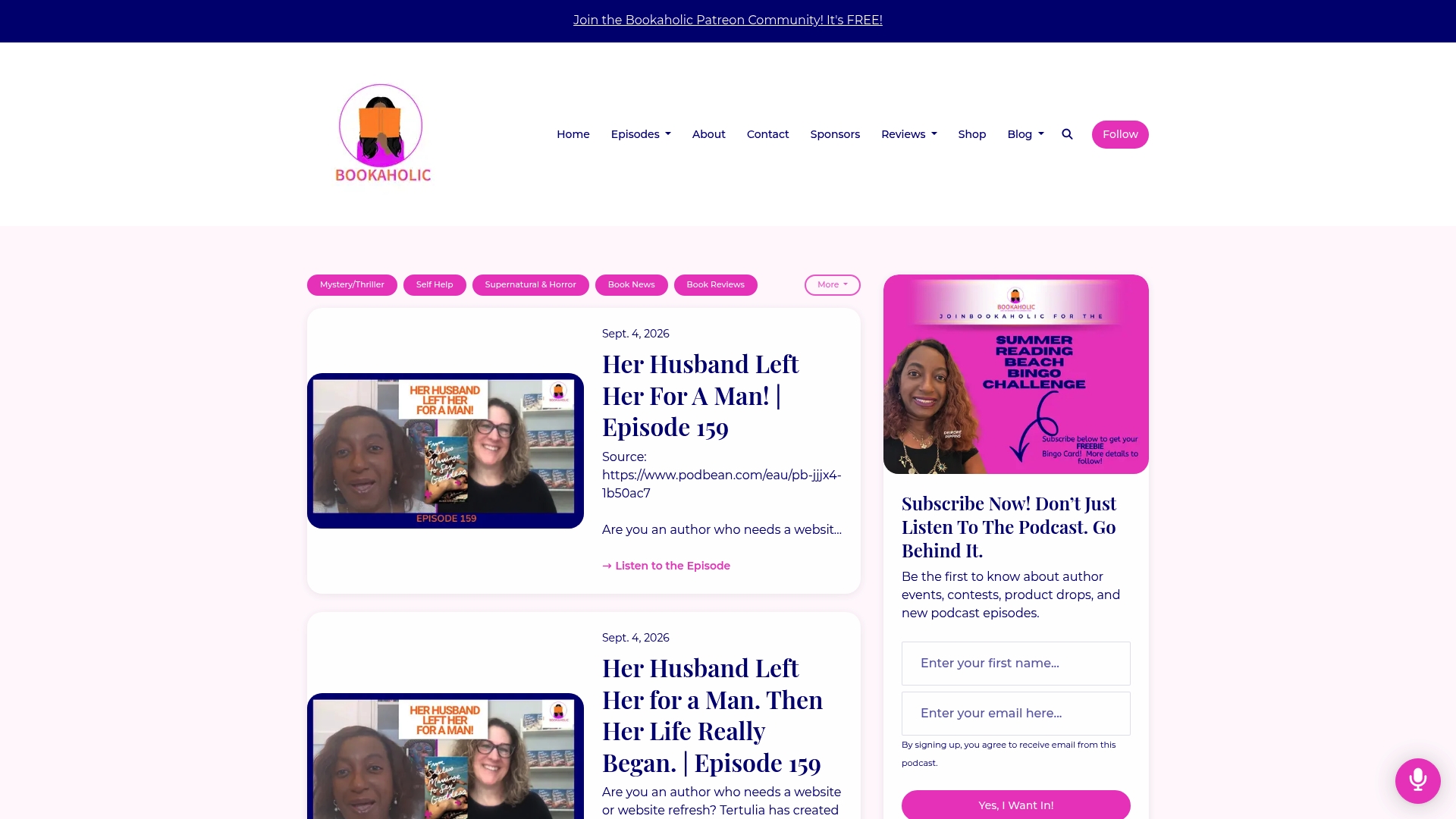
Our episodes on the writing journey and mental health alongside craft cover the emotional weight of querying that a checklist can't, and our blog rounds out the practical side, from short story contests worth entering while you query to marketing groundwork for after you sign. Explore the Bookaholic landing page for episodes, reviews, and ways to join the community as you keep refining your letter.
FAQ
How do I write a really good query letter?
Open with a hook that states stakes immediately, follow with a tight one to two paragraph summary, then add metadata, comps, and a short bio. Keep the whole letter to about 200 to 450 words and paste it directly into the email rather than attaching it.
What do literary agents want to see in a query letter?
Agents want a clear premise, a sense of tone through comps, and proof the manuscript is finished and polished. A personalized line showing you researched their list also signals professionalism beyond a mass-sent form letter.
How can I write a query letter?
Start with the anatomy: salutation, hook, summary, metadata, comps, bio, and closing, each doing one job. Draft the hook last after the summary is solid, since the strongest opening line often comes from the sentence that best captures the book's core conflict.
What is an example of a query?
A sample query opens with a one-line hook built on stakes, follows with a two-paragraph summary of the protagonist and conflict, lists title, word count, and genre, names one or two recent comps, and closes with a brief bio and thank-you. The annotated model earlier in this guide shows each of those parts in sequence.
Sources
- Conflicting advice you'll receive about query letters | Jane Friedman
- Query tips from agents | Fiction Foundry (Columbia alumni)
- Successful query letter examples for writers in various genres | Writer's Digest
- How to personalize query letters | Nathan Bransford