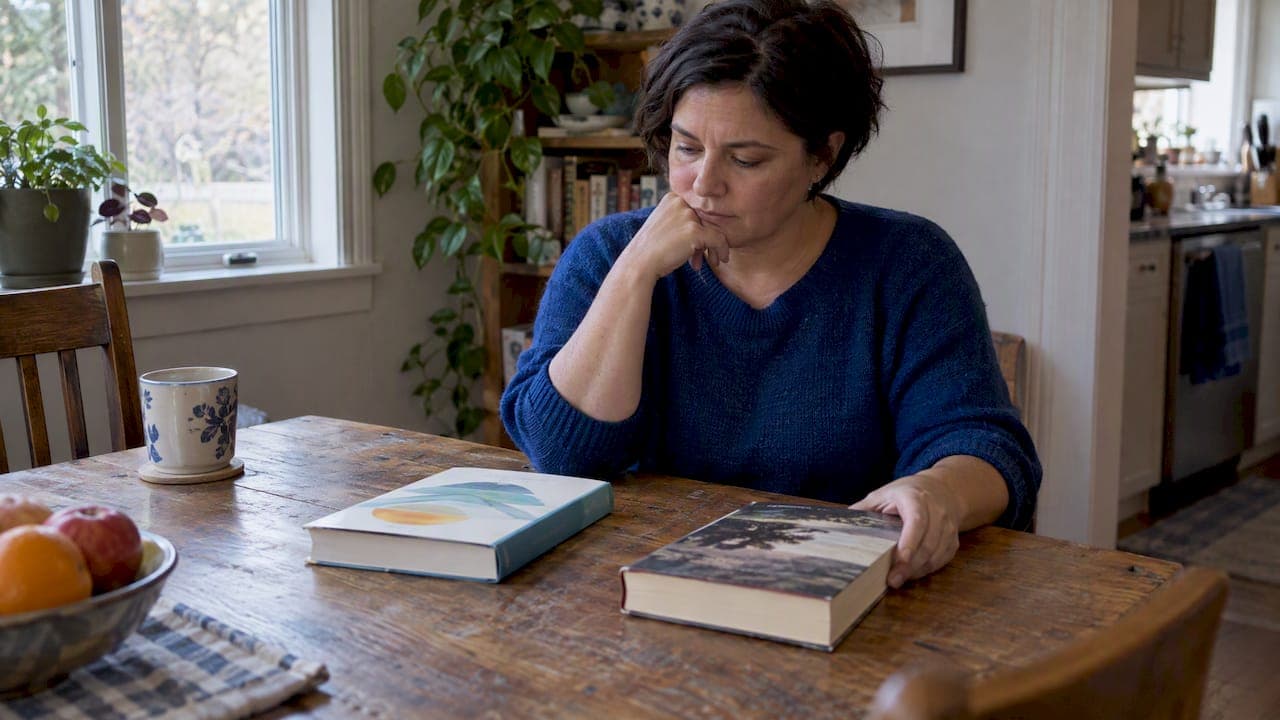
Bibliotherapy books, chosen with care and matched to what you're actually working through, can genuinely help you cope with anxiety, depression, grief, or a rough life transition. They work best when paired with some kind of guidance, whether that's a therapist, a support group, or just a clear plan for how to read them. Below, we've gathered clinician-recommended, evidence-backed titles for adults and children, along with the research behind why they help and exactly how to use them.
TL;DR:
- Match each book to a specific concern: use behavioral activation workbooks for depression, thought record exercises for anxiety, and memoir or narrative nonfiction for grief.
- A 2018 review of randomized trials found bibliotherapy reduced depression and anxiety symptoms in young people, with stronger effects among depressed teens than anxious children.
- For children, caregivers should use parent guides for anxiety, read picture books interactively, and let older readers explore stories before a low pressure discussion.
- Bibliotherapy should support, not replace, professional care; readers with moderate to severe symptoms, especially trauma concerns, should involve a clinician.
- Set a small target, such as one chapter or worksheet per sitting, and pair it with journaling or a discussion prompt.
Table of Contents
- Adult Bibliotherapy Picks: Workbooks, Memoir, and Fiction That Help
- Children and YA Bibliotherapy Picks for Caregivers and Educators
- What the Research Says About Bibliotherapy and How to Use It Well
- Top 10 Bibliotherapy Picks With a Use Tip for Each
- Where Bibliotherapy Came From
- Matching the Approach to the Condition
- What Bibliotherapy Looks Like in Practice
- How We Choose What Goes on a Bibliotherapy List
- More Curated Lists, Episodes, and Reading Companions
- FAQ
- Sources
Adult Bibliotherapy Picks: Workbooks, Memoir, and Fiction That Help
The strongest adult bibliotherapy lists mix structure with story. Workbooks give you exercises to practice; memoirs and fiction give you language for what you're feeling and proof that other people have moved through it too. The VA bibliotherapy resource guide notes that books work best as an adjunct to treatment rather than a replacement for it, which shapes how we recommend using every title below.
- Feeling Good by David Burns: a foundational CBT workbook built for depression, best for readers who want structured exercises they can return to daily.
- Mind Over Mood by Greenberger and Padesky: widely used in clinical settings for anxiety and depression, best for readers who like worksheets and guided thought records.
- Maybe You Should Talk to Someone by Lori Gottlieb: a therapist's own memoir of therapy, best for readers who want perspective-taking and a sense that even clinicians struggle.
- The Midnight Library by Matt Haig: a novel about regret and alternate lives, best for readers processing a major decision or sense of stuckness.
- Overcoming Depression One Step at a Time by Michael Addis and Christopher Martell: a behavioral activation workbook, best for readers who respond to small, scheduled action steps.
Our clinician-recommended books about anxiety list goes deeper on anxiety-specific picks, and our depression book list rounds out options for skills, story, and safety. For grief specifically, our therapist-recommended grief books guide walks through eight questions to help you pick the right one.
Children and YA Bibliotherapy Picks for Caregivers and Educators
Bibliotherapy for young readers works differently than it does for adults. A picture book can open a conversation a worried child can't start on their own, and a middle grade novel can let a teenager see their own anxiety reflected back without feeling exposed. Caregivers and educators get the most out of these books when they read alongside the child rather than just handing over a title.
- Helping Your Anxious Child by Rapee, Spence, Cobham, and Wignall: a clinician-written parent guide, best used by caregivers wanting structured, evidence-informed strategies rather than a read-aloud.
- Picture books for ages 4 to 8: pause after each page to ask what the character might be feeling, which turns a read-aloud into a gentle check-in.
- Middle grade novels (ages 8 to 12) featuring a character facing a similar worry: follow up with one open question, like "did anything in that book feel familiar?"
- YA novels tackling anxiety, grief, or identity: let teens read independently first, then offer a low-pressure conversation starter rather than a debrief.
- Graphic novels and illustrated formats: a strong option for reluctant or younger readers, since the format can lower the barrier to engaging with difficult topics while still delivering the story's emotional core.
Our uplifting books list also includes several family-friendly picks worth adding to a home or classroom shelf.
What the Research Says About Bibliotherapy and How to Use It Well
The evidence for bibliotherapy is real, though it comes with nuance worth understanding before you hand someone a book and call it treatment. A 2018 meta-analysis of randomized clinical trials found that bibliotherapy was significantly more effective than control conditions for reducing depression and anxiety symptoms in children and adolescents, with a standardized mean difference indicating moderate effectiveness (95% CI: -0.89 to -0.15), and stronger effects showed up in depressed adolescents than in anxious children.
Bibliotherapy's advantages are accessibility, privacy, and low cost, making it a good entry point or adjunct for those delayed from accessing therapy.
More recent systematic reviews of self-guided interventions from 2024 show that newer formats, including NLP-based and internet-delivered tools, sometimes outperform traditional bibliotherapy, though literature-based reading remains a foundational and widely accessible option. Older meta-analytic work on bibliotherapy in unipolar depression found medium-to-large effects compared with waitlist controls, with some studies reporting outcomes comparable to face-to-face therapy in limited samples.
In practice, this means: pick a title matched to your specific concern rather than a general bestseller, set a short goal like one chapter or one worksheet per sitting, pair reading with journaling or discussion prompts, and seek a therapist or counselor's input if symptoms are moderate to severe.
Top 10 Bibliotherapy Picks With a Use Tip for Each
This shortlist spans ages, formats, and approaches so you can find a starting point today.
- Feeling Good by David Burns. Best for depression. After each chapter, complete one of the included thought-record exercises before moving on.
- Mind Over Mood by Greenberger and Padesky. Best for anxiety and depression. Fill out one worksheet per week rather than rushing through the whole book.
- Maybe You Should Talk to Someone by Lori Gottlieb. Best for perspective on therapy itself. Keep a notebook nearby and jot down one line that resonates per chapter.
- The Midnight Library by Matt Haig. Best for regret and life transitions. Write a short reflection on which "other life" tempted you most and why.
- Overcoming Depression One Step at a Time by Addis and Martell. Best for low motivation. Schedule one small activity from the book each day this week.
- Helping Your Anxious Child by Rapee and colleagues. Best for parents of anxious kids. Try one coaching script from the book during your child's next worry spiral.
- A grief-focused memoir from our therapist-recommended grief list. Best for loss and mourning. Read it alongside a trusted friend and talk through one chapter together.
- A picture book about big feelings for ages 4 to 8. Best for young children. Pause mid-story to ask, "What do you think happens next?"
- A middle grade novel featuring an anxious or grieving protagonist. Best for kids 8 to 12. Ask one open question after finishing: "Did any part feel like your own story?"
- A graphic novel with an emotional throughline. Best for reluctant or visual readers. Let the reader narrate the pictures back to you in their own words.
Pro Tip: Pair any workbook from this list with a private, consistent place to write your reflections, since the act of recording your own words tends to matter as much as the reading itself.
If journaling privacy is a concern, three privacy-focused steps for evidence-based healing are worth reviewing before you start.
Where Bibliotherapy Came From
Bibliotherapy isn't a recent invention dressed up in a trendy label. The practice traces back to ancient libraries, where inscriptions reportedly described reading rooms as places of healing for the soul. The term itself gained traction in the early twentieth century, when librarians and physicians began prescribing specific books to hospitalized patients and soldiers recovering from the first World War, treating reading as a structured part of recovery rather than idle pastime.
By the mid-1900s, the practice had moved into psychiatric hospitals and social work training, where clinicians used carefully chosen fiction and nonfiction to help patients process trauma, loneliness, and institutionalization. Librarians developed early reading lists organized by emotional need, a direct ancestor of the curated lists common today. The rise of cognitive behavioral therapy in the latter half of the century gave bibliotherapy a second wind, since CBT translates unusually well into workbook form: structured exercises, homework, and measurable progress all fit naturally on the page.
What's changed since then is mostly delivery. Where a librarian once handed over a single recommended title, readers now have access to curated digital lists, workbooks tested in clinical trials, and even self-guided apps. The underlying idea, that the right book at the right time can move someone forward, has held steady for more than a century.

Matching the Approach to the Condition
Not every concern calls for the same kind of book, and the research bears this out. Depression tends to respond well to behavioral activation workbooks, the kind that assign small, scheduled actions rather than asking readers to simply reflect. Anxiety, by contrast, often benefits more from cognitive restructuring tools, like the thought-record exercises found in Mind Over Mood, because the core problem is distorted thinking rather than inactivity.
Grief rarely responds well to a workbook at all. Memoir and narrative nonfiction tend to serve grieving readers better, since the goal is usually companionship and validation rather than skill-building. Trauma calls for extra caution: the VA bibliotherapy resource guide frames bibliotherapy as most useful as an adjunct to professional treatment, and trauma-focused reading in particular benefits from a clinician's involvement rather than solo use.
For children, the condition shapes format as much as content. Anxious children often do best with parent-mediated guides like Helping Your Anxious Child, where the adult learns strategies to coach the child, rather than a book aimed directly at the child. Older kids processing grief or identity questions, on the other hand, often prefer to read independently first and discuss afterward, since direct guidance can feel intrusive at that age.

What Bibliotherapy Looks Like in Practice
Case examples in the clinical literature tend to follow a similar shape: a reader working through depression or anxiety completes a structured workbook over several weeks, often with brief check-ins from a clinician, and reports measurable improvement in symptoms alongside a sense of having tools they can reuse. The 2018 meta-analysis reflects this pattern across dozens of randomized trials in children and adolescents, not as a single anecdote but as a consistent finding across study populations.
Library-based bibliotherapy programs tell a similar story on a smaller scale. University and public library guides, including Penn Libraries' bibliotherapy recommendations, describe curated lists built for specific concerns like grief, addiction, or loneliness, used by librarians and caregivers who've seen readers find real footing through a well-matched title. The common thread across both clinical trials and library practice is specificity: a book chosen for a particular need outperforms a generic recommendation every time, and a little structure around the reading experience tends to matter as much as the book itself.
How We Choose What Goes on a Bibliotherapy List
We build our bibliotherapy recommendations the way we build every list on the podcast: by balancing what clinicians and researchers point to with what readers actually tell us moved them. Our conversations with authors and our own reading lives shape which memoirs and novels make the cut alongside the clinical workbooks, because a book's therapeutic value often lives in both its structure and its storytelling. Our blog lists on anxiety, depression, and grief reflect that same balance, and we keep returning to the subject because so many of our listeners write in asking for it.
— Deirdre
More Curated Lists, Episodes, and Reading Companions
If this list sparked something, we have more where it came from. Our episode pages dig deeper into individual titles through author interviews, and our curated blog lists cover everything from grief to uplifting fiction in more detail than one article can hold.
We also carry literary merchandise for readers who like to mark their reading life with something tangible, whether that's a journal for the reflection prompts above or a little reminder that books carried you through something hard. Browse our full lineup of episodes, lists, and merchandise and find your next read.
This article is general information, not a substitute for advice from a qualified doctor. Consult a qualified healthcare professional about your own circumstances before acting on anything here.
FAQ
What is bibliotherapy and how does it work?
Bibliotherapy is the practice of using carefully chosen books, including workbooks, memoirs, and fiction, to support emotional wellbeing or process a specific concern. It tends to work by giving readers language, structure, or perspective they can apply to their own situation, often most effectively when paired with brief guidance from a professional.
Are bibliotherapy books backed by research?
Yes, though the strength of evidence varies by condition and format. A 2018 meta-analysis found bibliotherapy significantly reduced depression and anxiety symptoms in children and adolescents, and earlier meta-analytic work found similar effects for unipolar depression in adults.
Can bibliotherapy replace therapy?
Bibliotherapy is best understood as a support tool rather than a replacement for professional care, a point the VA bibliotherapy resource guide makes directly for clinicians using it with patients. It can be a strong first step or an adjunct alongside therapy, especially for moderate symptoms, but more severe symptoms call for a clinician's involvement.
How do I choose the right bibliotherapy book?
Start by matching the book to your specific concern rather than picking a general bestseller, since reviews note that many popular self-help titles haven't been empirically tested. A clinician, librarian, or curated list organized by concern, like grief, anxiety, or depression, narrows the field far more effectively than browsing at random.
Do bibliotherapy books work for children too?
Yes, and the evidence is particularly strong here: the same 2018 meta-analysis found notable effects in children and adolescents, with especially strong results for depressed teens. Parent-mediated guides like Helping Your Anxious Child let caregivers learn strategies to coach an anxious child, which tends to work better than handing a young child a book to read alone.
Sources
- Comparative efficacy and acceptability of bibliotherapy for depression and anxiety disorders in children and adolescents: a meta-analysis of randomized clinical trials
- VA bibliotherapy resource guide
- Bibliotherapy in unipolar depression: a meta-analysis - Database of Abstracts of Reviews of Effects (DARE)