
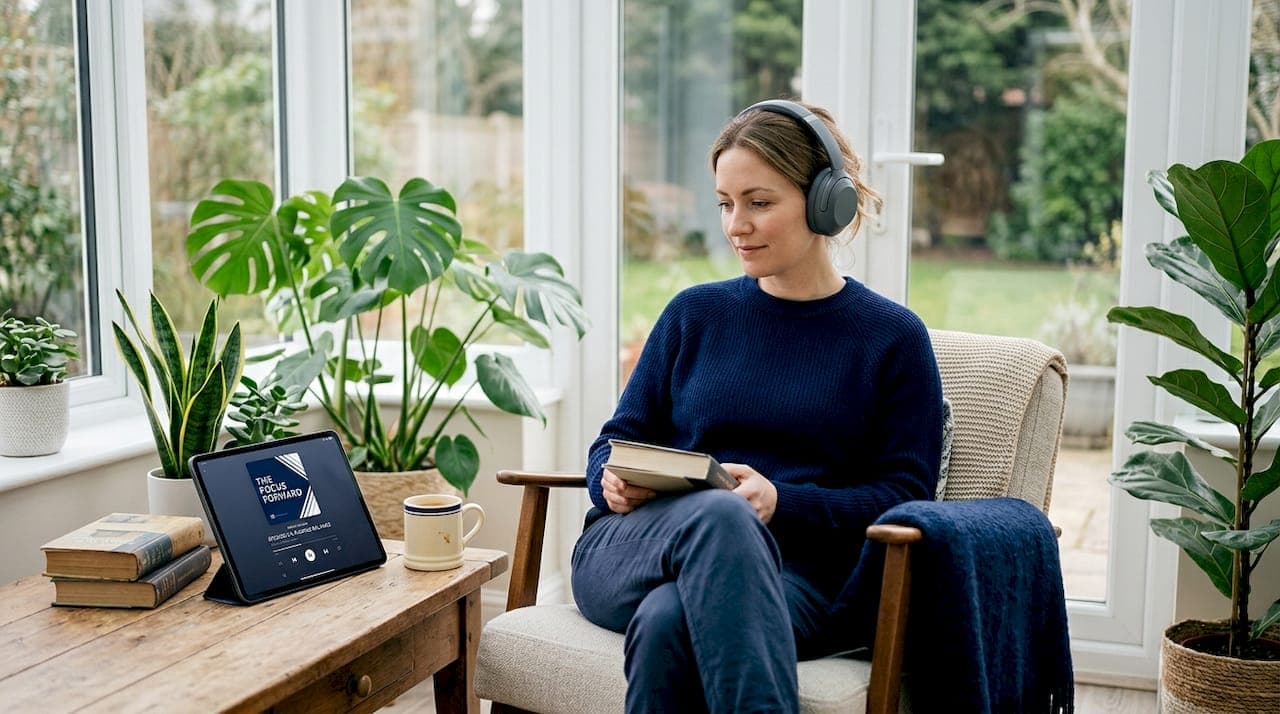
If you love books and you love podcasts, there is a good chance you have already stumbled across a book podcast and wondered whether it was worth committing to. The reasons to join a book podcast go well beyond just getting a few reading recommendations. These shows offer something genuinely rare: a warm, knowledgeable community built around the books you care about, hosted by people who are just as passionate as you are. Whether you are looking for author insights, curated picks, or a place to feel less alone in your reading life, book podcasts deliver in ways that a quick Goodreads review simply cannot.
Table of Contents
- Key takeaways
- What to look for before you join a book podcast
- 7 reasons to join a book podcast as an avid reader
- How book podcasts compare to book clubs and audiobooks
- How to choose the right book podcast for your interests
- My honest take on what book podcasts do that nothing else quite can
- Explore Book-a-holic and find your next great read
- FAQ
Key takeaways
| Point | Details |
|---|---|
| Community over passive consumption | Book podcasts create interactive literary communities, not just one-way listening experiences. |
| Author access is unmatched | Podcast interviews reveal author mindset and backstory that traditional reviews rarely capture. |
| Flexible and on-demand | You can listen while commuting, cooking, or walking, fitting literary enrichment into any schedule. |
| Active listening improves comprehension | Pausing and re-listening helps you get more from podcast discussions than passive background listening. |
| Format variety matters | Choosing a show with structured episodes and clear themes accelerates your literary taste development. |
What to look for before you join a book podcast
Not every book podcast is built the same way, and knowing what separates a great one from a forgettable one will save you a lot of skipped episodes. Before you commit, consider a few key factors.
Format and structure make a significant difference. Some shows offer deep-dive single-book episodes. Others run roundtable discussions, author interviews, or themed genre explorations. Goalhanger's The Book Club, for example, launched in February 2026 and airs every Tuesday with a tightly structured format: unpack the themes, explore the author's context, and close with a definitive ranking. That kind of intentional structure helps you actually retain what you hear.
Community interactivity is another factor worth weighing. Some shows are purely audio content. Others, like Athenaeum Book Club, pair podcast episodes with live biweekly Zoom discussions, moderated chats, and subscriber archives. If you want more than listening, look for shows that build real participation into their model.
Here is a quick checklist to guide your search:
- Episode length and pacing (do they match your schedule and attention span?)
- Availability of back catalogs and archives
- Host credibility and genuine enthusiasm for the subject matter
- Community spaces such as forums, live calls, or social groups
- Thematic variety across genres, time periods, and author backgrounds
Pro Tip: Before committing to a new book podcast, listen to at least three episodes back-to-back. One episode rarely gives you a true feel for the show's rhythm, depth, or community vibe.
7 reasons to join a book podcast as an avid reader
1. You get direct access to author insights
Reading a book is one experience. Hearing the author explain why they made certain choices is something else entirely. Book podcasts that feature author interviews pull back the curtain on the creative process in a way that no back-cover blurb ever could. You learn about the research behind historical fiction, the personal grief woven into a memoir, or the structural risks an author took in a thriller. That context changes how you read their work, both backward and forward.
2. You build genuine community with other readers
One of the most underrated benefits of book podcasts is the sense of belonging they create. Podcast hosts like Olivia Ponton and Morgann have built cozy, close-knit communities around long-form discussions that go well beyond surface-level reviews. When you find a show where the host's taste aligns with yours, you are not just gaining recommendations. You are joining a conversation that feels personal, even when you are listening alone on a Tuesday morning commute.

3. You discover books you would never have found on your own
Algorithms are useful, but they tend to keep you inside a narrow bubble of what you already know you like. Book podcasters, by contrast, bring genuine curation. They read widely, talk to authors across genres, and surface titles that would never trend on a bestseller list. Shows that cover book news regularly introduce listeners to debut authors, overlooked backlist titles, and international fiction that deserves far more attention than it gets.
4. You get deeper literary understanding through structured discussion
A well-structured episode does more than summarize a plot. It helps you think. Podcast episodes that analyze historical context, author background, and narrative craft help listeners build literary taste and memory retention far faster than casual reading alone. When someone articulates why a novel's ending is devastating or why a particular structural choice paid off, you start noticing those things in every book you pick up afterward.
5. You fit meaningful literary content into a busy life
This is one of the most practical advantages of podcasts for readers. You do not need to carve out quiet reading time. You can absorb a 45-minute deep-dive discussion while folding laundry, walking the dog, or sitting in traffic. The on-demand nature of podcasting means your literary life does not have to compete with your schedule. It fits inside it.
6. You engage with live discussions and real-time Q&A
Many book podcasts now offer more than recorded episodes. Biweekly live sessions with Q&A, moderated chats, and community archives give listeners a way to actively participate rather than passively consume. This is where the benefits of book podcasts start to feel less like entertainment and more like ongoing education. Asking a question during a live session and having a host or fellow reader respond in real time creates a connection that no solo reading session can replicate.
7. You sharpen your own reading instincts over time
Regularly listening to thoughtful book discussions trains your critical eye. You start to notice narrative structure, pacing decisions, and thematic resonance in ways you might not have before. The video podcast and multi-format growth trend in 2026 reflects how deeply audiences are investing in this kind of content. Listeners are not just consuming. They are developing genuine literary sensibility through repeated, engaged exposure to expert analysis and enthusiastic conversation.
Pro Tip: Keep a running note on your phone while listening to book podcasts. Jot down titles mentioned, author names, and any themes that spark your curiosity. Your next reading list practically writes itself.
How book podcasts compare to book clubs and audiobooks
Understanding where book podcasts fit among other reading-adjacent activities helps you decide how much of your time they deserve.
| Feature | Book podcasts | Traditional book clubs | Audiobooks |
|---|---|---|---|
| Scheduling flexibility | On-demand, any time | Fixed meeting times | On-demand, any time |
| Community interaction | Varies (some live, some passive) | High, in-person or virtual | None |
| Author insights | Frequent, especially interview shows | Rare | None |
| Literary depth | High, with structured shows | Depends on group | None (content only) |
| Discovery potential | Very high | Limited to group's picks | Moderate |
| Cognitive engagement | Active listening required | Active discussion | Passive unless re-listened |
A few things stand out from this comparison:
- Traditional book clubs offer real-time social connection, but they require everyone to read the same book on the same schedule. That constraint eliminates a lot of potential readers.
- Audiobooks deliver the text itself, but they offer no analysis, no community, and no author conversation.
- Book podcasts sit in a unique middle space. They are flexible like audiobooks but carry the intellectual richness of a great book club discussion.
One honest caveat: listening comprehension at inferential levels can be lower than reading, especially without control over playback pace. This means podcast listening works best when you treat it actively. Pause when something surprises you. Re-listen to a section that challenged you. Pair the podcast with the book itself when a title really grabs your attention.
How to choose the right book podcast for your interests
Once you know you want to join a book discussion through podcasting, the next step is finding the right show. Here is how to narrow it down without wasting weeks on the wrong one.
Start with your goal. Are you looking for reading recommendations? Deep literary analysis? Author stories? Community connection? Different shows prioritize different things, and knowing what you want helps you filter quickly.
Match the format to your lifestyle. A 90-minute weekly deep-dive is wonderful if you have the time and focus for it. If your listening windows are shorter, look for shows with 20 to 40-minute episodes that still deliver substance without demanding your entire afternoon.
Look for community infrastructure. The best book podcasts build spaces for ongoing conversation. Shows that integrate live sessions and community chats create a lifestyle approach to literature, not just a passive media habit. Check whether the show has a newsletter, a Discord, a Patreon community, or social spaces where listeners actually talk to each other.
Evaluate the host's credibility and warmth. A knowledgeable host who reads widely and speaks with genuine enthusiasm is worth more than a polished production with shallow content. Listen for specificity. Does the host reference the author's other work? Do they notice craft-level details? Do they make you want to read the book immediately? Those are signs of a show worth your time.
Check the back catalog depth. A show with 50 or more episodes gives you a rich archive to explore. You can binge episodes on a genre you love, catch up on author interviews, or revisit discussions after you finish a book. That depth transforms a podcast from a weekly habit into a genuine literary resource.
My honest take on what book podcasts do that nothing else quite can
I have been hosting Book-a-holic for a while now, and I will tell you something I did not fully anticipate when I started. The most meaningful thing a book podcast creates is not a reading list. It is intimacy.
When I sit down to record an author interview, something happens that a written review cannot replicate. The author's voice carries the weight of what they went through to write the book. You hear the hesitation when they describe a difficult chapter. You hear the joy when they talk about a character they loved writing. That texture is irreplaceable, and it changes how listeners connect with the book before they even open it.
I also think people underestimate how much active podcast listening sharpens your reading. Listeners benefit most when they engage deliberately, pausing to reflect and re-listening when something lands hard. I always encourage my listeners to treat episodes like conversations, not background noise. When you do that, you start carrying the discussion into your actual reading, and your experience of the book deepens in ways that feel almost surprising.
Book podcasts do not replace reading. Nothing does. But they create a layer of literary life around your reading that makes the whole experience richer, more connected, and a lot more fun.
— Deirdre
Explore Book-a-holic and find your next great read
If the reasons to join a book podcast have you ready to find a show that feels like home, Book-a-holic is a great place to start. Hosted by Deirdre Pippins, Book-a-holic brings you author interviews, book reviews, book news, and genuine literary conversation every episode. Whether you want to discover a thriller author interview that makes your next read impossible to put down or an inspiring author story that reminds you why books matter, there is an episode waiting for you. Come join the conversation.
New to bookish media? The Booktube Newbie Tag is a warm and fun place to begin.
FAQ
What are the main reasons to join a book podcast?
Book podcasts offer author insights, curated reading recommendations, literary community, and on-demand flexibility that traditional book clubs and solo reading cannot always provide.
Are book podcasts good for serious readers?
Yes. Well-structured shows analyze themes, author context, and narrative craft, helping serious readers develop deeper literary appreciation and faster taste-building over time.
How do book podcasts compare to audiobooks?
Audiobooks deliver the text itself, while book podcasts provide discussion, analysis, and author interviews around books. They serve different purposes and work best together.
Do I need to read the book before listening to a book podcast episode?
Not always. Many episodes are designed to introduce you to a book and its author, making them excellent discovery tools even before you have read a single page.
How can I get more out of listening to book podcasts?
Active listening strategies such as pausing, re-listening to key sections, and taking notes help you retain more and engage more deeply with the discussion.